

A Political and Public Policy Analysis for M•I•A MEDIA GROUP | Legacy Magazine
With the November 3 midterm elections approaching, Broward County’s Black community faces significant political, economic and social challenges. From affordable housing and education to voting rights and economic opportunity, decisions made in Tallahassee, Washington and Broward County government will have lasting consequences.
Broward is home to a politically influential Black population, including African Americans, Haitian Americans, Jamaican Americans and other Caribbean communities.
The central question facing Black voters is whether their elected representatives are delivering measurable improvements in economic security, educational opportunity, political representation and quality of life.
Here are the 12 issues I would prioritize for Legacy South Florida’s political coverage.
1. Affordable Housing and the Rising Cost of Living
Priority: Extremely High
Housing affordability is arguably the most immediate economic issue confronting Black working-class and middle-class families in Broward County.
Major concerns include:
- Rising rents in Fort Lauderdale, Lauderdale Lakes, Lauderhill, Miramar and surrounding communities.
- Increasing property taxes and homeowners insurance premiums.
- Limited opportunities for first-time Black homebuyers.
- Displacement of longtime residents through redevelopment and gentrification.
- Difficulty for younger professionals to purchase homes in the communities where they grew up.
Broward commissioners approved a $9.2 billion county budget in September 2026 that includes $27.7 million for the Affordable Housing Trust. The question is whether those investments will produce enough housing that working families can afford.
Political accountability question:
What specific policies will elected officials implement to increase Black homeownership, reduce housing costs and prevent longtime residents from being displaced?
2. Education, School Closures and Educational Equity
Priority: Extremely High
The future of Broward County Public Schools is one of the most consequential political issues facing Black families.
The school district reports losing more than 48,000 students over the past decade, contributing to a substantial reduction in funding.
The district is considering school closures, consolidations and other changes to address declining enrollment.
Critical questions include:
- Will predominantly Black neighborhoods experience a disproportionate number of school closures?
- Will students lose access to neighborhood schools?
- How will school closures affect transportation and working parents?
- Are Black students receiving equitable access to advanced academic programs?
- What is being done to improve reading proficiency, graduation rates and college readiness?
An additional election issue: Broward voters will decide whether to renew an existing property tax supporting teacher compensation, school safety and mental health services. The district says the referendum supports approximately $358 million in annual funding.
Political accountability question:
Are Broward’s elected school board members protecting educational opportunities for Black children while managing the district’s financial challenges?
3. Black Political Representation and Congressional Redistricting
Priority: Extremely High
One of Broward County’s most sensitive political issues involves the future of Black representation in Congress.
Florida’s 20th Congressional District has historically been an important center of Black political representation.
The 2026 congressional contest has generated debate over representation, redistricting and the political influence of Black voters.
Several Black Democratic leaders expressed concerns about Debbie Wasserman Schultz entering the District 20 race, arguing that Black representation could be weakened. Other voters have emphasized evaluating candidates based on their qualifications and policies rather than race alone.
The broader issues extend beyond one congressional race.
Important questions include:
- Is Black political influence declining in Broward County?
- Are Black elected officials receiving meaningful leadership opportunities?
- How should congressional districts be drawn to protect fair representation?
- Are political parties investing adequately in Black candidates?
- Are Black voters being taken for granted by either political party?
Political accountability question:
Does Broward County’s Black community have political representation proportionate to its population, voting strength and contributions to the region?
4. Economic Development, Black-Owned Businesses and Government Contracts
Priority: Extremely High
Economic opportunity must be a central part of Broward County’s political agenda.
Black entrepreneurs continue to confront barriers involving business financing, government procurement, commercial real estate and access to major development projects.
Key concerns include:
- Access to Broward County government contracts.
- Participation in airport and seaport development opportunities.
- Small-business financing and access to capital.
- Opportunities for Black construction companies and professional service firms.
- Economic development in historically underserved neighborhoods.
- Accountability in government supplier-diversity programs.
The Broward County Black Chamber of Commerce has highlighted legislation affecting diversity initiatives and its potential implications for the business community.
Political accountability question:
How much of Broward County’s public contracting dollars are going to Black-owned businesses, and what measurable steps are being taken to increase economic participation?
5. Diversity, Equity and Inclusion Policies
Priority: Very High
Florida’s restrictions on diversity, equity and inclusion initiatives have raised significant concerns about equal opportunity.
The political debate involves competing arguments about whether DEI programs address longstanding discrimination or create preferences that conflict with equal-treatment principles.
For Broward County, the practical questions involve employment, education and contracting.
Areas requiring examination include:
- Equal access to public employment.
- Hiring and promotion practices.
- Diversity in government leadership.
- Minority-business participation.
- College scholarships and educational opportunities.
- Whether changes to DEI policies are affecting Black professionals.
Political accountability question:
How will elected officials ensure fair access to employment, education and business opportunities regardless of changes to DEI policies?
6. Healthcare Access and Health Disparities
Priority: Very High
Healthcare affordability and access remain significant concerns for Black residents, particularly seniors and working families.
Key issues include:
- Access to affordable health insurance.
- Diabetes, hypertension and cardiovascular disease.
- Black maternal health and infant mortality.
- Mental health services.
- Healthcare access for uninsured residents.
- Availability of primary care and preventive services.
A previous Broward County equity assessment documented disparities in health insurance coverage between Black and white residents, underscoring the importance of updated data and targeted policy responses.
Political accountability question:
What will elected officials do to reduce preventable illnesses, improve healthcare affordability and address racial disparities in health outcomes?
7. Immigration, Haitian Temporary Protected Status and Caribbean Communities
Priority: Very High
Immigration policy is particularly important in Broward County because of its substantial Haitian and Caribbean populations.
Federal immigration decisions can directly affect families, employers, schools and neighborhoods.
Major concerns include:
- Temporary Protected Status for eligible Haitian immigrants.
- Deportation policies and family separation.
- Immigration enforcement.
- Employment authorization.
- Access to legal assistance.
- Immigration-related discrimination.
These concerns are particularly relevant in communities such as Lauderdale Lakes, Lauderhill, North Lauderdale and parts of Fort Lauderdale.
Political accountability question:
What are Broward’s congressional representatives and local officials doing to protect residents’ legal rights, support immigrant families and address the economic consequences of federal immigration decisions?
8. Criminal Justice, Policing and Public Safety
Priority: High
Public safety is a fundamental concern for Black residents, but so are fairness, transparency and accountability.
Important issues include:
- Police accountability and transparency.
- Racial profiling and discriminatory enforcement.
- Juvenile justice reform.
- Gun violence prevention.
- Community policing.
- Mental health crisis response.
- Reentry programs for formerly incarcerated residents.
The political challenge is balancing effective law enforcement with constitutional protections and community trust.
Political accountability question:
Are Broward County’s public safety investments producing safer neighborhoods while protecting civil rights and ensuring accountability?
9. Voting Rights, Voter Participation and Election Access
Priority: Extremely High
With the November 3 election approaching, voting access is an immediate priority.
Key issues include:
- Voter registration and eligibility.
- Vote-by-mail procedures.
- Early voting access.
- Election misinformation.
- Voter participation among younger Black residents.
- Political engagement beyond presidential elections.
Broward’s early voting period runs from October 19 through November 1. The deadline to request a vote-by-mail ballot is October 22 at 5 p.m.
The Broward County Supervisor of Elections provides official election information.
Political accountability question:
Are political parties and community organizations doing enough to educate and mobilize Black voters, particularly younger voters who may feel disconnected from government?
10. Property Taxes, Homeowners Insurance and Retirement Security
Priority: Very High
The rising cost of maintaining a home threatens economic stability for Black homeowners, particularly retirees and families living on fixed incomes.
- Major concerns include:
- Rising homeowners insurance premiums.
- Property tax increases.
- Condominium assessments.
- Flood insurance.
- Home repair expenses.
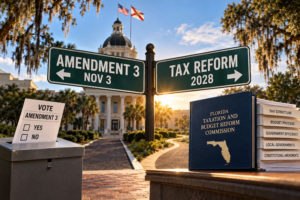
- The impact of proposed property tax changes on public services.
A significant policy question is whether property tax relief proposals could reduce funding for essential local government services.
Political accountability question:
How will elected officials provide meaningful property tax and insurance relief without undermining schools, public safety and other services?
11. Workforce Development, Wages and Middle-Class Economic Security
Priority: High
Broward County’s economic future depends on creating jobs that provide sustainable wages and opportunities for advancement.
Important issues include:
- Workforce training and apprenticeships.
- Artificial intelligence and job displacement.
- Career opportunities for young Black professionals.
- Access to technology-related employment.
- Economic opportunities at Port Everglades and Fort Lauderdale-Hollywood International Airport.
- The availability of jobs paying enough to support a family in South Florida.
Political accountability question:
What specific plans do elected officials have to help Black residents secure higher-paying jobs and build long-term financial stability?
12. Government Transparency, Accountability and Political Leadership
Priority: High
Black residents should have confidence that elected officials are acting in the public interest.
Important concerns include:
- Transparency in government contracting.
- Ethics and conflicts of interest.
- Fair hiring and promotion practices.
- Oversight of public spending.
- Representation on influential government boards.
- Accountability for campaign promises.
This issue affects every level of government, from municipal commissions to the Broward County Commission and school board.
Political accountability question:
Are elected officials delivering measurable results for the communities that elected them?
