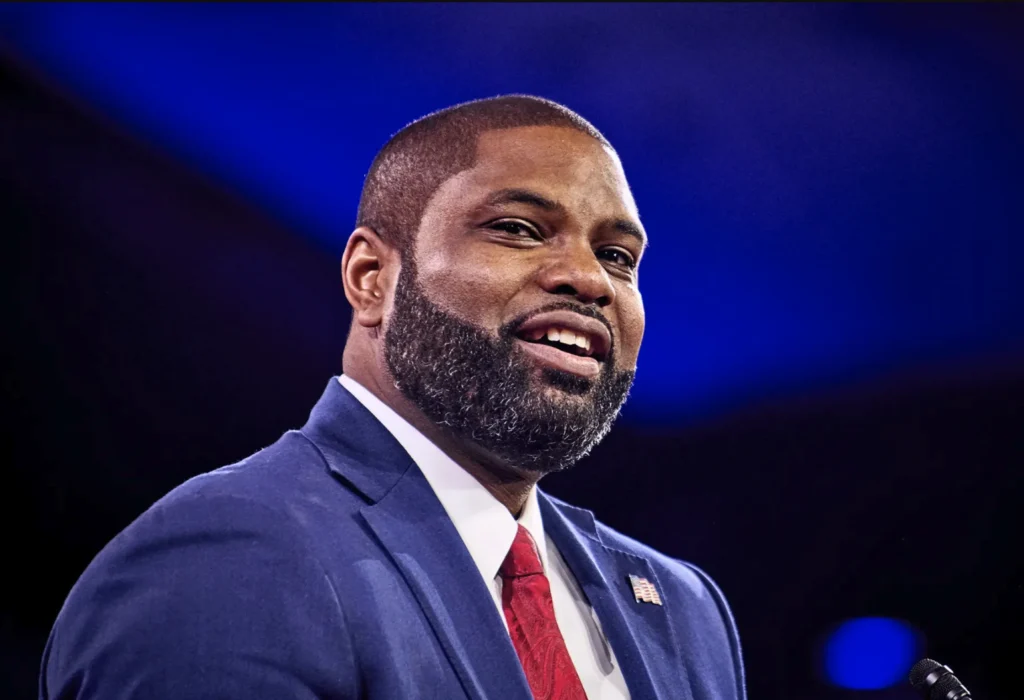

In an exclusive M•I•A MEDIA GROUP interview, the Republican candidate for Florida governor discusses DEI, immigration, affordable housing, education, health care, voting rights and his relationship with President Donald Trump.
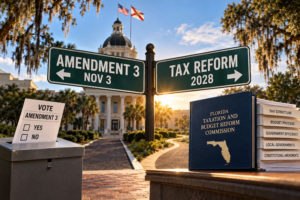
As Florida approaches the Nov. 3 general election, Republican gubernatorial candidate Byron Donalds is seeking to expand his appeal among Black voters, a constituency that could play an important role in determining the state’s political future.
For Black residents of Miami-Dade, Broward and Palm Beach counties, the election raises consequential questions about economic opportunity, civil rights, affordable housing, education, health care and political representation.
M•I•A MEDIA GROUP- Legacy Editorial presented Donalds with 11 questions addressing some of the most pressing concerns facing Black Floridians. His responses offer insight into his political philosophy, policy priorities and the commitments he says he would make as governor.
The following questions and responses are presented as provided, without editorial changes.
1. Diversity, Equity and Inclusion (DEI)
Question:
Congressman Donalds, what is your position on diversity, equity and inclusion initiatives? Florida has eliminated or restricted DEI programs in several public institutions. Many Black professionals argue that these initiatives helped address longstanding barriers to employment, education and advancement. Do you believe systemic racial discrimination still exists in Florida? If so, what specific policies would your administration implement to ensure Black Floridians have equal access to opportunities without DEI programs?
Donalds:
I support Florida’s decision to end government-funded DEI. I believe in diversity, and I believe in merit. Where DEI goes wrong is the equity piece: it promises equal outcomes instead of equal opportunity.
Does discrimination still happen? Yes, individuals still face it, and where it happens, it is illegal. My administration will enforce the law. But the answer is not sorting people by race. It’s making sure every child reads on grade level, every family has school choice, every young person has a path to a skilled trade or a degree, and every small business can open its doors without drowning in red tape. That is real opportunity, and it works for everybody.
2. Immigration and Temporary Protected Status (TPS)
Question:
South Florida has one of the largest Haitian communities in the United States. What is your position on Temporary Protected Status for Haitian immigrants? You have supported the Trump administration’s position that TPS must remain temporary. However, thousands of Haitian immigrants contribute to Florida’s economy, particularly in health care, hospitality and construction. Given the ongoing instability and violence in Haiti, would you support extending their protections? What would you say to Haitian families who fear deportation and separation?
Donalds:
I understand the fear from these families, and I don’t take it lightly. Haitian Floridians are woven into this state: our nurses, our caregivers, our entrepreneurs, our churches.
But I’m not going to tell you something different to win a vote. TPS was designed to be temporary, and it was stretched far beyond that. The lasting answer is a safe, stable Haiti, which is why I’ve met directly with Haiti’s transitional government and its ambassador.
As governor, here’s my commitment: if you’re lawfully in Florida, you have nothing to fear. And I’ll make sure our workforce programs are training the next generation of Floridians for the health care and service jobs this community has carried for years.
3. Affordable Housing and the Rising Cost of Living
Question:
South Florida has become increasingly unaffordable for working families, particularly in historically Black communities. What would you do differently as governor? Many longtime residents of Liberty City, Overtown, Miami Gardens, Fort Lauderdale and West Palm Beach are struggling with rising rents, property insurance premiums and housing costs. Beyond tax relief, what specific policies would you implement to increase affordable housing, protect longtime homeowners and prevent displacement through gentrification?
Donalds:
Affordability is the number one issue in Florida, and it’s hitting historically Black neighborhoods hardest. My plan goes at the three highest costs.
Insurance: My Bring Down the Bill Plan keeps the tort reforms that are already working, boosts competition, expands home-hardening grants, and lowers surcharges on policyholders. Our goal is to cut premiums 20 to 30 percent.
Property taxes: I support expanding the homestead exemption and working toward eliminating property taxes on primary homes. That’s how you protect longtime homeowners in Liberty City, Overtown, and Miami Gardens from being taxed out of the homes their families built.
Supply: We’ll speed up local permitting and cut the cost to build, so more homes get built and rents come down.
4. Your Comments Regarding Black Americans During Jim Crow
Question:
Congressman, you previously made comments suggesting that Black families were better positioned in certain respects during the Jim Crow era. Can you explain exactly what you meant? Critics interpreted your remarks as minimizing the discrimination, segregation and violence Black Americans experienced during that period. Do you understand why those comments offended many African Americans? Looking back, would you express those views differently today, and how do those beliefs influence your approach to policies affecting Black families?
Donalds:
I never said, and I never would say, that Black Americans were better off under Jim Crow. Jim Crow was segregation, violence, and the denial of basic rights. Period.
I was talking about the Black family. Marriage rates were higher before the 1960s, and I believe later government policies helped pull families apart. That’s what I meant.
Do I understand why people heard it differently? Yes. Putting those two ideas in the same sentence made it easy to mishear what I meant, and I’d say it more carefully today. But the conviction behind it hasn’t changed: strong families build strong communities, and my policies are designed to support them.
5. Black-Owned Businesses and Economic Development
Question:
Black-owned businesses continue to face significant barriers to capital, government contracts and opportunities for expansion. What is your economic development plan for these businesses? As governor, would you establish measurable goals to increase participation by Black-owned businesses in state procurement and contracting? Would you support targeted technical assistance, access to capital and partnerships with community financial institutions? Most importantly, how would you measure whether your policies are actually producing results?
Donalds (Educated guess)
The biggest barrier for small business owners in Florida isn’t a lack of programs. It’s cost, red tape, and access. My plan is built to knock those down for every entrepreneur.
We’ll streamline permitting and licensing, allow reciprocal contractor licensing, and open state contracting so small and first-time vendors can actually compete. I’ll work with community banks and lenders to bring capital to overlooked neighborhoods.
And yes, we’ll measure it. We will track and publish small-business participation in state contracting, broken out by region, so every community can see whether it’s working.
6. Education, School Choice and Historically Black Colleges and Universities
Question:
You have been a strong advocate for school choice. How would you ensure that your education policies do not leave traditional public schools in predominantly Black communities with fewer resources? Your education platform emphasizes literacy, parental choice and workforce development. How would you address achievement gaps, teacher shortages and deteriorating school facilities in underserved neighborhoods? Additionally, what specific commitments would you make to Florida’s historically Black colleges and universities, including Florida A&M University and Bethune-Cookman University?
Donalds:
School choice isn’t about leaving public schools behind. It’s about making sure no child is trapped in a school that isn’t working. I’ll strengthen traditional public schools while expanding options.
My priorities: every child reading by third grade, teacher pay that keeps great teachers in the classroom, and real career pathways like apprenticeships and internships so students graduate with a future.
On HBCUs, this is personal. I was a FAMU Rattler for three years. In Congress, I championed the federal debt relief that wiped out over $111 million in capital-financing debt for FAMU. As governor, I’ll protect and grow state support for FAMU and Bethune-Cookman, including FAMU’s engineering partnership with FSU.
7. Health Care Disparities and Access
Question:
Black Floridians continue to experience significant disparities in maternal health, chronic disease outcomes and access to affordable medical care. What would your administration do to close these gaps? Florida has not adopted the Affordable Care Act’s Medicaid expansion. Would you reconsider that position to provide coverage to more uninsured working adults? What investments would you make in community health centers, preventive care and maternal health programs serving underserved communities?
Donalds:
I don’t support Medicaid expansion. It grows a system that already costs too much and delivers too little. I want to lower the cost of care for everyone.
My “Your Doctor, Your Price” plan requires hospitals and doctors to post real cash prices for their 20 most common services. Patients get the same discounted rates insurers negotiate. Insurers have to approve common treatments within three days. And we’ll bring prescription prices down by tying Florida Medicaid to most-favored-nation pricing.
For mothers, I’ll invest in pregnancy resource centers and preventive care, so women get support early and stay healthy after they deliver.
8. Criminal Justice Reform and Policing
Question:
Black Floridians remain disproportionately affected by certain aspects of the criminal justice system. What reforms would you support as governor? Would you support greater transparency in police misconduct investigations, expanded rehabilitation and reentry programs, and a review of sentencing disparities? How would your administration balance strong law enforcement with accountability and the protection of constitutional rights, particularly in communities where trust between residents and police remains fragile?
Donalds:
I’ve done this work. In the Florida House, I helped raise the felony theft threshold for the first time since 1986, and I filed the Florida First Step Act to give people a real path back.
I believe in being tough on crime and understanding the human being. Punishment has to end, and when it does, people deserve a way back to their families and jobs.
I also know what a second chance means. I made mistakes when I was young, and I was given an opportunity to make it right. As governor, I’ll back our police, hold bad actors accountable, expand reentry and job training, and ensure the system treats people fairly.
9. Voting Rights and Political Representation
Question:
Florida has faced repeated controversies over voting laws, redistricting and access to the ballot box. How would you ensure that every eligible Black Floridian can exercise the right to vote without unnecessary barriers? Would you support measures that make voter registration, early voting and mail voting more accessible? What is your position on restoring voting rights to people with felony convictions who have completed their sentences? And how would you ensure that Florida’s congressional and legislative districts provide fair representation for Black communities?
Donalds:
Every eligible Floridian should be able to vote, and every voter should trust the result. Florida already has some of the strongest access in the country: weeks of early voting, no-excuse mail voting, and fast results.
On rights restoration, I was an early supporter of Amendment 4. People who have completed their sentences should have a clear, simple path back to the ballot box, and I’ll make that process easier to navigate.
On districts, maps must follow the Constitution and the law, and the courts ensure they do.
10. Accountability, Representation and Your Relationship With President Trump
Question:
Congressman Donalds, you have been one of President Donald Trump’s most visible supporters. However, many Black voters strongly disagree with the president’s positions on DEI, immigration, voting rights and federal economic policies. If elected governor, would you be willing to publicly oppose President Trump when his policies negatively affect Florida’s Black communities? You have recently said your campaign is seeking more than 20% of the Black vote. Beyond asking Black Floridians for their support, what specific commitments are you prepared to make to earn their trust?
Donalds:
Yes, the President endorsed me, and I endorsed him. I’m not running away from that. But I’m running to be governor of Florida, and Florida comes first. If any policy from any administration hurts Floridians, I’ll say so and fight for our state.
I’m my own man. As Black people, we don’t like being stereotyped, so don’t judge me by someone else. Judge me by my ideas.
I’m aiming for more than 20 percent of the Black vote because I’m not taking a single community for granted. My commitment is simple: I’ll keep showing up, in Overtown, Miami Gardens, North Miami, Broward, and at FAMU, and I’ll deliver on what matters most: lower insurance bills, lower property taxes, better schools, and real jobs.
Closing Question
Question:
“Congressman Donalds, you are asking Black Floridians to help elect you as Florida’s next governor. Yet many believe the political movement you represent has supported policies that have weakened programs and protections important to their communities. Why should Black voters believe that a Byron Donalds administration would improve their economic opportunities, protect their civil rights and address the challenges they face? What can you point to in your legislative record that demonstrates you have already delivered for them?”
Donalds:
Because I’m not asking for your vote based on a party label. I’m asking based on results.
When I was in the State House I worked with Democrats to help deliver $25M to FAMU for the student success building in Tallahassee. I fought for debt relief for our HBCUs in Washington. When HBCUs were hit with bomb threats, I pushed Congress to hold hearings. And my whole agenda is aimed at what Black families tell me keeps them up at night: insurance bills, property taxes, rent, and whether their kids will have a shot.
I know what it’s like to need a second chance, and I know what one can do. That’s the Florida Dream, and I want every family in this state to have it.
