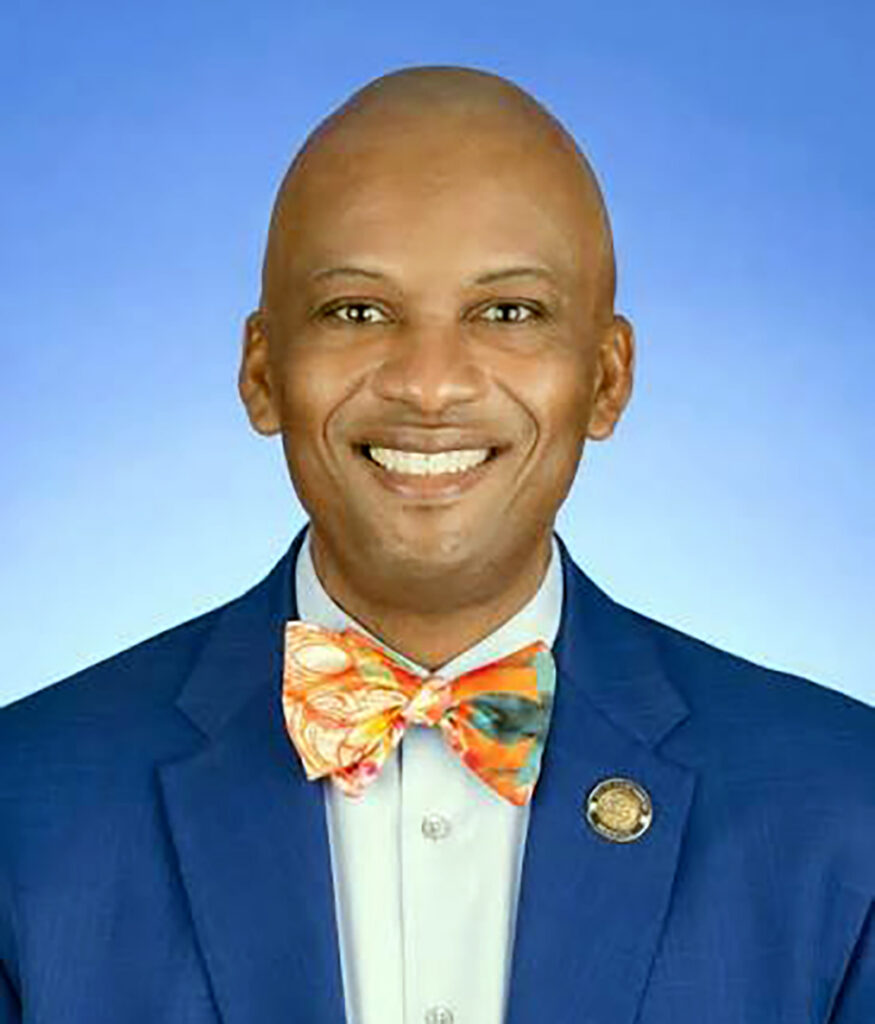

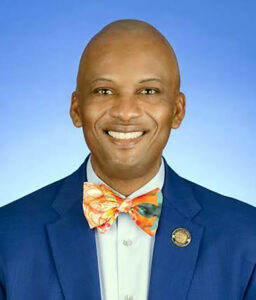


From Miami Gardens to Capitol Hill, Oliver Gilbert sees the whole picture.
Ask Oliver Gilbert about his superpower and he doesn’t hesitate.
“I don’t give up.”
It’s a deceptively simple answer from a man who has grown himself into a household name in South Florida over nearly two decades in public office. Now the Democratic nominee to succeed beloved Congresswoman Frederica Wilson in Florida’s 24th Congressional District, Gilbert is looking toward Washington with the same persistence that defined his years in Miami Gardens to his leadership on the Miami-Dace Commission. He knows the next chapter won’t be easy. “If it were easy, everybody would have health care. If it were easy we’d have a living minimum wage” he says. “It’s never been easy.”
To understand Gilbert, you must first understand the City of Miami Gardens. Proud, authentic, confident, deeply engaged and unapologetically taking up space. The largest Black city in Florida has invested in itself from the inside out. Its residents expect to be heard and its leaders to deliver and they do, consistently and with purpose. As councilman and later mayor, Gilbert helped shape that civic culture, encouraging a community to define its own possibilities rather than accept someone else’s limitations.
He acknowledges that he has learned from the people in his political life like the late former Mayor Shirley Gibson who taught him the force of will and unwavering focus. He jokes about how current Florida Representative Felecia Robinson got him to wear colors. Now he’s known for his unique flair and love of orange and green, school colors from both his alma maters, FAMU and UM. He credits former councilman Aaron Campbell with showing him how to bring police and community together. These are just a few of the people who have animated his imagination and shaped his understanding of our community.
“My lived experiences inform my goals. My education informs how I try to actually achieve them.”
For instance, his obsession with mass transit comes from his time as a student and how many forms of transportation he needed just to get a good education; from taking the bus with his siblings and cousins to Parkview Elementary, to taking the Metrorail to get to his law classes at UM to his father picking him up from the same Metrorail late at night. He knows personally what mass transit can do, what opportunities are open to people who can move easily from one place to the next.
Perhaps his most personal and impactful education has come from his 19-year-old son, Oliver, who is autistic. Fatherhood transformed his understanding of communication. “I went from being someone who could speak well to someone who had to learn to communicate well, not just speak,” he explains. He learned to listen for what his son needed, even when those needs were difficult to express.
And he began asking a larger question: What happens when autistic children grow into adults who still need individualized care and communication, especially after their parents are gone? His CARE Act concept envisions coordinated housing, healthcare and long-term support for neurodivergent individuals who need special care and communication.
Gilbert sees connections where government often creates compartments. Housing, transportation, education, healthcare and entrepreneurship are not separate problems; they’re part of the same ecosystem. Ignore one and the others suffer.
Over the past two decades, he has brought that whole-picture ecosystem approach to politics. He has challenged powerful institutions, but he has also built working relationships with colleagues across party lines. He’ll fight when necessary but prefers the kind of negotiation where both sides gain something meaningful and neither gets everything they want.
In Washington, he wants lawmakers to focus less on political spectacle and more on making homeownership, mass transit, healthcare and education accessible. “Do something,” he insists and points out that there is no silver bullet, there is no superman in the sky coming to save us. But he also acknowledges that if he has to fight to bring the bacon back to South Florida, he will with no hesitation. His immediate mission is to join the appropriations committee, following in Wilsons’ footsteps, to ensure dollars come directly back to District 24 to establish interrelated projects that move the collective needle from poverty to generational wealth.
And what skills that he has mastered will he take with him to the halls of Congress? The cultural fluency of Miami, where different languages, backgrounds and traditions aren’t exceptions; they’re everyday life. If you live in this community, like it or not, you learn how to communicate with all kinds of cultures. He believes that instinct for connecting across differences can travel with him to Washington.
His measure of success is simple: “I don’t believe in perfection; I believe in progress.”
