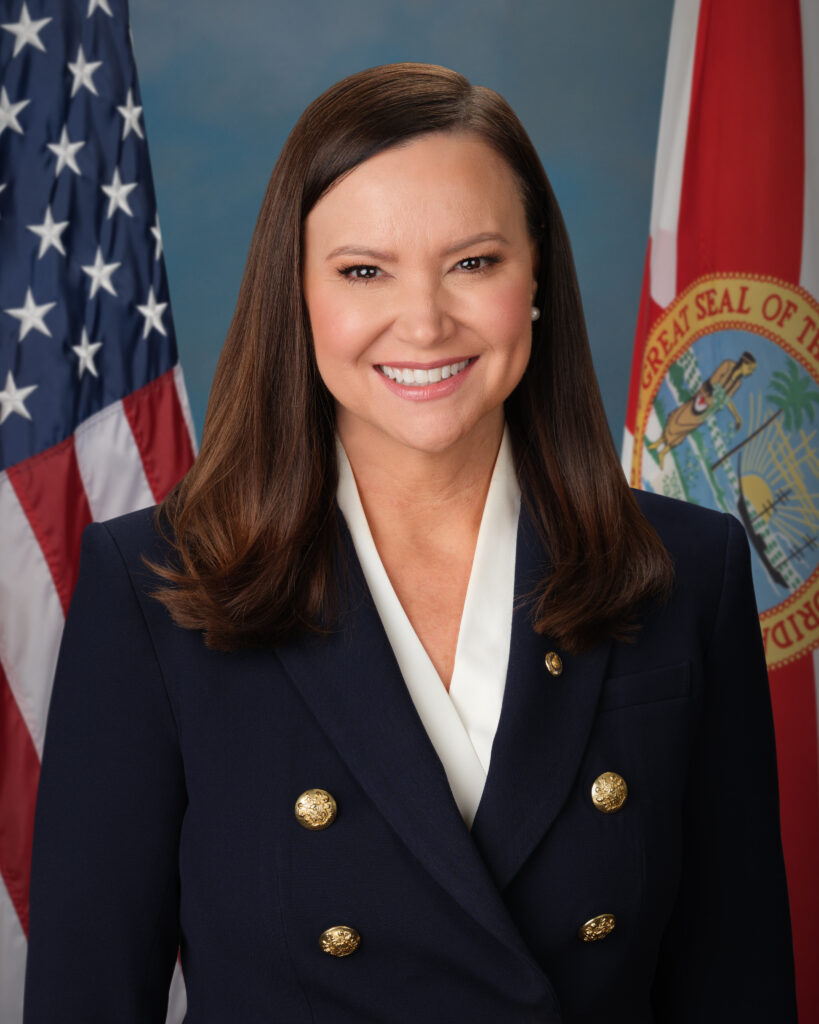








As Florida’s U.S. Senate race intensifies, Moody faces scrutiny over policies affecting economic opportunity, voting rights, health care and civil rights.
As Florida’s 2026 U.S. Senate election approaches, Republican Sen. Ashley Moody faces a significant challenge: convincing Black voters that her conservative policies will address the economic and social inequalities affecting their communities.
Appointed to the Senate by Gov. Ron DeSantis in January 2025, Moody is seeking to retain her seat against Democratic state Rep. Angie Nixon. Their competing political philosophies present voters with sharply different approaches to economic opportunity, civil rights, health care and government accountability.
For Black residents of Miami-Dade, Broward and Palm Beach counties, Moody’s record raises questions about whether her policies adequately address longstanding disparities.
Diversity and Economic Opportunity
As Florida’s attorney general, Moody opposed diversity, equity and inclusion initiatives she considered discriminatory. Her position reflects a conservative philosophy emphasizing race-neutral policies and individual merit.
But many Black business leaders and professionals argue that eliminating diversity initiatives without meaningful alternatives threatens progress in employment, corporate leadership and government contracting.
Moody supports tax reductions and deregulation, arguing that economic growth benefits businesses and working families. Yet her agenda offers fewer specific answers about expanding access to capital for Black entrepreneurs or addressing persistent racial wealth disparities.
Voting Rights and Civil Liberties
Moody’s defense of Florida election restrictions has drawn criticism from voting rights advocates who contend that such measures disproportionately burden minority voters.
Her supporters maintain that election security laws strengthen public confidence and apply equally to all voters.
For Black communities with a history of disenfranchisement, however, the debate extends beyond election procedures. It raises fundamental questions about political representation and equal access to democracy.
Health Care and Immigration
Moody’s support for Republican spending legislation containing Medicaid reductions has raised concerns about health care affordability.
Black Floridians already experience significant disparities in chronic disease, maternal health and access to medical services. Critics question whether federal spending reductions could deepen those inequalities.
Immigration presents another challenge, particularly among South Florida’s Haitian and Caribbean communities.
Moody strongly supports stricter immigration enforcement, but questions remain about protections for Haitian immigrants facing uncertainty over Temporary Protected Status and deportation.
Public Safety and Accountability
A former prosecutor and judge, Moody emphasizes law enforcement and public safety. That approach may resonate with Black residents concerned about violent crime.
However, civil rights advocates also seek stronger police accountability, fair sentencing and reforms addressing racial disparities in incarceration.
Moody’s opposition to expanded abortion rights has similarly generated concerns among reproductive health advocates focused on Black maternal mortality and access to care.
The Question Facing Black Voters
Moody’s supporters argue that lower taxes, safer communities and equal treatment under the law benefit Floridians regardless of race.
Her critics contend that policies treating everyone identically do not necessarily eliminate inequalities rooted in generations of discrimination.
The central issue is not whether Moody’s conservative policies can benefit Black Floridians. It is whether she can demonstrate how those policies produce measurable improvements in their lives.
Legacy Magazine made several attempts to contact Moody’s campaign to provide an opportunity for the senator to address these concerns and explain her policies toward Black Floridians. Unfortunately, as of press time, the campaign had not responded to our requests for comment.
As voters evaluate Moody and Nixon, they deserve specific commitments on economic mobility, health care, voting rights and education.
For Moody, winning greater support among Black Floridians will require more than promises of prosperity. It will require convincing voters that their concerns are understood, their opportunities matter and their voices will be represented in Washington
