




Property tax relief sounds appealing, but Florida voters should consider what they could lose in exchange for lower tax bills.
Florida homeowners are struggling. Rising insurance premiums, escalating housing costs and persistent inflation have made living in the Sunshine State increasingly expensive. Against that backdrop, a proposal to substantially reduce property taxes sounds like welcome relief.
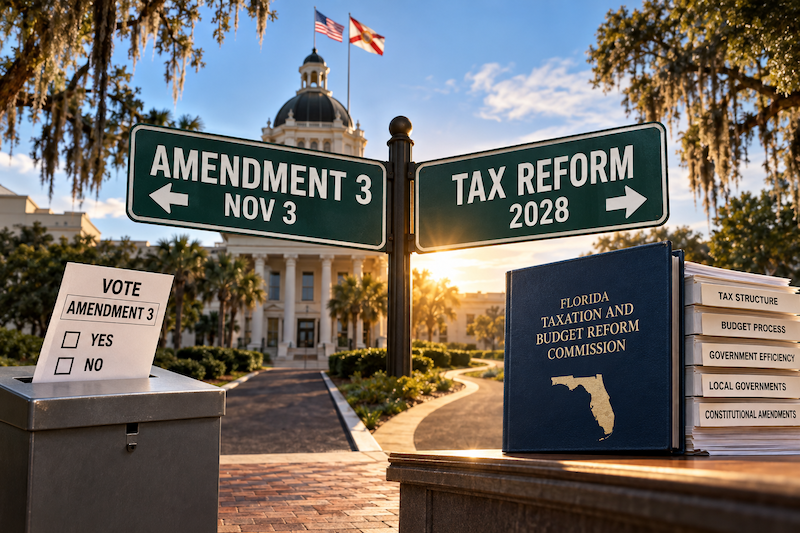
But Florida’s Amendment 3, which voters will consider Nov. 3, raises a troubling question: What happens when the state cuts billions of dollars from local government revenue without establishing a reliable way to replace it?
The answer could have serious consequences for communities across Miami-Dade, Broward and Palm Beach counties.
Amendment 3 would increase the homestead exemption for nonschool property taxes to $150,000 in 2027 and $250,000 in 2028, with future increases tied to inflation and a pathway toward eliminating nonschool property taxes on primary residences.
Supporters argue that homeowners deserve relief from rising property values and the accompanying tax burden. They have a legitimate point. Property ownership should not become financially impossible for families who have spent decades building their lives in Florida.
But tax relief without a responsible funding strategy is not meaningful reform. It is a financial gamble with consequences that extend far beyond individual homeowners.
State economists estimate that Amendment 3 would reduce local government revenue by approximately $13.7 billion during its first two years, with annual losses approaching $12 billion thereafter.
That money currently supports essential services, including police protection, fire rescue, emergency medical services, road maintenance, libraries and other community programs.
While the amendment preserves school property taxes, it does not guarantee that other public services will remain adequately funded.
Consider what that means for South Florida.
In Miami-Dade County, where residents already confront traffic congestion, aging infrastructure and housing affordability challenges, reduced revenue could make it harder to maintain roads, strengthen neighborhoods and deliver emergency services.
In Broward County, municipalities could face difficult decisions involving police staffing, fire protection, parks and public facilities.
In Palm Beach County, communities with fewer financial resources could find themselves competing for increasingly limited public dollars.
The consequences could be particularly severe in historically underserved neighborhoods, where public investment is essential to economic mobility and neighborhood stability.
There is another fundamental problem: Amendment 3 does little to directly help renters.
Thousands of South Florida families rent their homes while struggling with rising monthly payments. They would receive no direct homestead tax exemption, even though they depend on the same public services that could face reductions.
Meanwhile, homeowners with more valuable properties could receive substantial tax savings.
That raises legitimate questions about fairness.
If local governments lose billions in revenue, they may eventually turn to higher fees, special assessments or other taxes to maintain essential operations.
In that scenario, residents could discover that their property tax savings come with additional expenses elsewhere.
Florida should pursue meaningful property tax reform. But that reform must be financially responsible, equitable and transparent.
Lawmakers should consider targeted relief for seniors, low-income homeowners and longtime residents struggling to remain in their homes. They should also examine government spending, insurance costs and policies that contribute to Florida’s affordability crisis.
What they should not do is permanently weaken local governments’ financial foundations without providing a credible replacement.
A community’s strength is measured not simply by how little its residents pay in taxes, but by the quality of the services, infrastructure and opportunities those taxes help sustain.
Florida families deserve affordable housing, safe neighborhoods, reliable emergency services and a government capable of meeting their needs.
Amendment 3 offers immediate savings to many homeowners, but its long-term consequences could prove far more expensive.
Florida voters should reject Amendment 3 and demand a property tax plan that delivers genuine relief without sacrificing the communities they call home.
