



By Marcus Ellington | M•I•A MEDIA GROUP
November 4, 2026 | Florida Politics
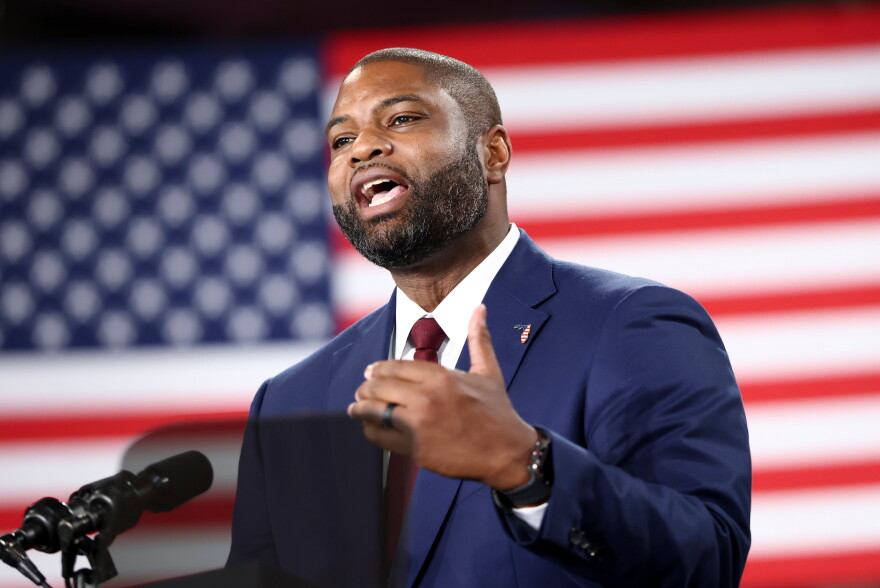
TALLAHASSEE, Fla. — Republican Byron Donalds made history Tuesday night, becoming Florida’s first Black governor and the first Black Republican elected governor in American history. His victory over Democrat David Jolly represents a significant political milestone. But for millions of Black Floridians, the larger question is whether that historic achievement will translate into meaningful economic opportunity, educational advancement and greater equality.
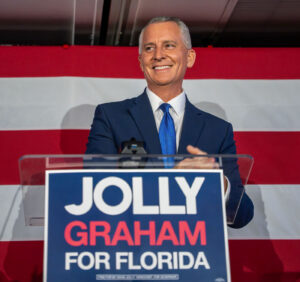
Donalds, a close ally of President Donald Trump and an outspoken conservative, won a closely contested election that extended Republican control of Florida’s governor’s office. The Associated Press called the race Tuesday night, with Donalds holding a narrow lead over Jolly.
His election breaks a racial barrier in a state with a complicated history of segregation, discrimination and unequal access to political and economic power. Yet it also raises questions about the relationship between racial representation and public policy.
For Black communities across Miami-Dade, Broward and Palm Beach counties, the significance of Donalds’ victory extends well beyond the color of the governor’s skin.
The question is not simply who occupies the governor’s mansion, but whose interests will be represented once he takes office.
A Historic Victory With Complicated Implications
Donalds’ election demonstrates that Black political leadership is no longer confined to one political party or ideological tradition. His rise reflects a growing diversity of political perspectives among Black Americans, even as Black voters have historically supported Democratic candidates by substantial margins.
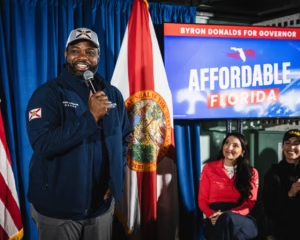
Throughout his campaign, Donalds emphasized conservative principles, economic opportunity, school choice, tax reductions and government accountability. He also sought to expand Republican support among Black voters, setting a goal of winning more than 20% of Florida’s Black vote.
However, his political alignment with Trump and his opposition to government-funded diversity, equity and inclusion initiatives place him at odds with many civil rights advocates who argue that such programs remain essential to addressing longstanding inequalities.
That philosophical divide could become one of the defining challenges of his administration.
For some Black Floridians, Donalds’ victory represents progress, individual achievement and an opportunity to broaden political influence. For others, it creates uncertainty about whether his administration will protect policies designed to address racial disparities.
Both perspectives underscore a fundamental reality: Representation alone does not guarantee progress.
Economic Opportunity Will Be a Defining Test
Perhaps the most immediate challenge facing Donalds is Florida’s affordability crisis.
Across South Florida, rising housing costs, property insurance premiums, commercial rents and everyday expenses continue to place pressure on working families and small-business owners.
These challenges can be particularly difficult for Black households already confronting disparities in income, homeownership and generational wealth.
Donalds has proposed reducing property taxes, addressing insurance costs and streamlining development regulations. His administration will now face the challenge of turning those campaign promises into measurable relief.
For Black entrepreneurs, additional questions remain.
Will his administration expand access to capital for historically underserved businesses? Will state contracting opportunities become more accessible? Will economic development reach communities such as Liberty City, Overtown, Miami Gardens, Lauderhill and Riviera Beach?
Those outcomes will help determine whether Donalds’ economic agenda benefits communities that have often struggled to participate fully in Florida’s prosperity.
Education, Civil Rights and the Future of DEI
Education and civil rights could present even sharper political divisions.
Donalds supports expanding school choice and strengthening educational opportunities. Supporters argue that giving parents more options can help students escape underperforming schools.
Critics contend that expanded school choice can divert resources from traditional public schools, which remain central institutions in many Black neighborhoods.
The challenge for Donalds will be demonstrating that his education policies improve outcomes for all students, particularly those attending schools in economically disadvantaged communities.
His administration will also inherit debates surrounding diversity initiatives, African American history instruction, equal employment opportunities and discrimination.
For civil rights organizations, the concern is whether Florida will continue moving away from programs intended to address historic barriers.
For Donalds and his conservative supporters, the argument centers on equal treatment under the law rather than government programs based on racial classifications.
The consequences of that disagreement could shape Florida’s institutions for years.
An Opportunity to Govern Beyond Party Lines
Donalds’ narrow victory also presents an opportunity to reconsider the increasingly polarized political environment that has defined Florida in recent years.
He will enter office with a historic mandate, but not an overwhelming electoral margin. That distinction matters.
Winning an election establishes the authority to govern. Building public trust requires demonstrating a willingness to listen to people who did not support the winning candidate.
Black civic organizations, business chambers, educators, faith leaders and community advocates should have meaningful opportunities to engage with the incoming administration, regardless of their political affiliations.
Such engagement should include substantive discussions about affordable housing, workforce development, public education, healthcare access and minority business participation.
Donalds’ willingness to engage those constituencies could help determine whether his governorship becomes a moment of broader political inclusion or another chapter in Florida’s partisan divisions.
History Has Been Made. Now Comes Accountability.
There is no diminishing the historical significance of Byron Donalds becoming Florida’s first Black governor.
For generations, such a milestone would have seemed unimaginable in a state where Black citizens once faced systematic exclusion from the political process.
But history also teaches that breaking barriers and dismantling inequalities are not necessarily the same achievement.
The responsibility now shifts from campaigning to governing.
Black Floridians have every reason to recognize the importance of Donalds’ election while maintaining the right to question his policies, challenge his decisions and demand accountability.
His success should ultimately be measured not only by the historical distinction of his election, but by whether families can afford homes, students receive quality educations, businesses gain access to opportunity and communities experience tangible improvements in their quality of life.
Byron Donalds has made history by becoming Florida’s first Black governor. Whether his administration makes history for Black Floridians will depend on what he does with the power voters have entrusted to him.
That is the distinction between achieving a political milestone and delivering lasting progress.
