








 Most leaders are consumed with whether AI will automate their jobs, replace their teams, or supercharge their efficiency. Those are real concerns — but they are tactical. The strategic question, the one that will determine who holds real power in the next economy, is this: Who controls the coordination layer?
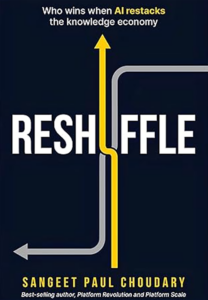
That is the central insight driving “Reshuffle”, the groundbreaking new book by platform strategist and global thought leader Sangeet Paul Choudary. And it should reshape how every ambitious leader — especially those in the Black business community — thinks about where power is actually being built right now.
Choudary makes a distinction that most AI conversations completely miss. The most valuable companies in today’s economy don’t own the means of production — they own the means of coordination. Think Amazon, not Ford. Think Apple’s App Store, not the factories that build the phone.
AI’s greatest economic force, Choudary argues, is not that it replaces human intelligence — it’s that it reduces coordination friction at a scale no human system ever could. Just as the shipping container made global trade reliable and predictable, AI makes knowledge work scalable. The leader who understands this is not asking “How can AI help my team work faster?” They are asking: “How can AI help me coordinate an entire ecosystem — and who gets to define the rules of that ecosystem?”
Owning the Orchestration Layer Is the New Competitive Moat
Here is where “Reshuffle” delivers its most provocative argument: the real prize in the AI economy is not using AI — it’s orchestrating it. Choudary calls this owning the “orchestration layer” — the position in a system where you define how partners, suppliers, users, and competitors must align to participate. That position, he argues, is the new competitive moat.
The warning embedded in this insight is stark: if you add AI without changing how coordination works in your organization, you are not building leverage for yourself. You are building it for the tool provider. You are renting power, not owning it.
The firm that controls how others must coordinate to participate in its system becomes less substitutable with every passing day. That is not just competitive advantage. That is structural power.
Operating Above the Algorithm
Choudary introduces a framework that every leader should internalize: the difference between operating above the algorithm and below it. Operating below the algorithm means being shaped by the system someone else built. Operating above it means shaping the system itself — deciding how decisions flow, where value concentrates, and who gets access to what.
For Black entrepreneurs and executives, this distinction carries generational weight. Historically, access to capital and infrastructure was the barrier. What “Reshuffle” reveals is that a new barrier is forming — and it is moving fast. Those who simply adopt AI tools are operating below the algorithm. Those who design the coordination systems, own the control points, and define the rules of engagement for others? They are the new power brokers of the knowledge economy.
The window to claim that position is open right now. But as Choudary makes clear throughout “Reshuffle”, it will not stay open forever. The reshuffling of the economy is already underway. The only question is which side of the deal you are on when it closes.
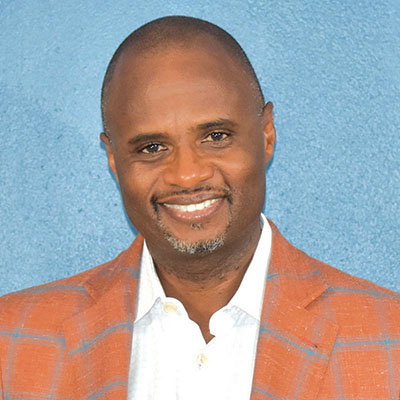
Marvin Dejean is the CEO and senior managing partner of Gilead Sanders LLC, a strategy and business transformation consulting practice based in Fort Lauderdale. He can be reached at mdejean@gileadsanders.com or online at www.gileadsanders.com.