








“When you control the economics of your community, you control its destiny.” Maynard Jackson
When Maynard Jackson spoke about controlling the economics of our community, he was not offering a slogan. He was delivering a warning grounded in experience. He understood that civil rights legislation can unlock a door. But if you do not own what is behind that door, you are still a guest in someone else’s house. You may be welcomed inside. You may even be invited to participate. But if you do not control the building, you do not control your destiny.
Access is not power. Opportunity is not ownership. Participation without capital is simply permission. Political victories may change the law, but economic strength determines whether those victories endure. Without ownership, without businesses, and without capital circulating within a community, progress can remain fragile. Generational wealth is not built on invitations. It is built on assets.
Over the years working in economic development across Miami-Dade, from my time at the Miami-Dade Chamber of Commerce to my current role leading the Miami-Dade Economic Advocacy Trust, I have seen how clearly this principle plays out in real communities. Economic power is not theoretical. It is visible in businesses that survive beyond the fragile early years. It appears when entrepreneurs can secure capital not just to stay alive, but to expand and compete. It appears in property that is owned rather than rented, and in investments that strengthen neighborhoods instead of bypassing them.
When a community has that kind of economic foundation, it is not easily shaken. It can endure market shifts. It can attract industry while maintaining its identity. It can grow without being displaced by the very development it helped create.
But we must also speak honestly about the present moment. Growth in a region does not always mean growth for the people who built it. Development can accelerate while ownership gaps remain. Investment may increase while access to meaningful capital stays limited. Too often, entrepreneurs are able to start businesses but struggle to scale them into lasting enterprises.
Healthy economies depend on businesses that expand, hire locally, and reinvest in the communities that supported them. When capital circulates within a community, resilience grows. When long term strategy replaces short term thinking, neighborhoods stabilize and families secure their future. Individual enterprise, when rooted in community investment, becomes a driver of regional strength.
The road ahead demands more than optimism. It requires preparation, coordination, and discipline. Economic strength does not appear on its own. It must be built deliberately, protected carefully, and expanded generation by generation.
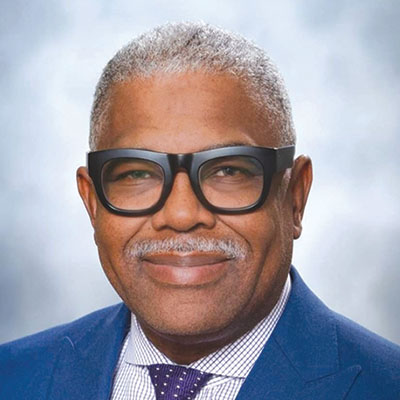
Bill Diggs is the executive director of the Miami-Dade Economic Advocacy Trust.