






By Simone Bennett | M•I•A MEDIA GROUP
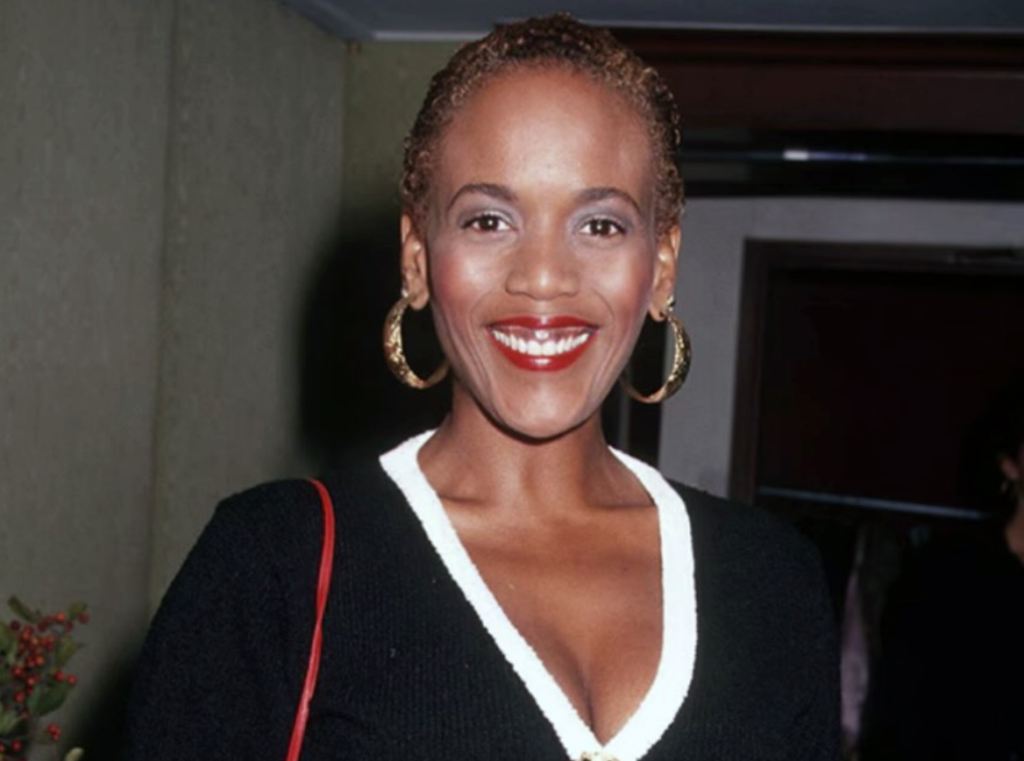
Before television audiences knew her as Eva Rawley on NBC’s “227,” Toukie Smith was already making a name for herself in fashion. She modeled for designers as different as Hubert de Givenchy, Issey Miyake and her brother Willi Smith, whose clothes brought the ease and inventiveness of street style into department stores. On television, she found a different kind of audience, joining a comedy that made everyday life in a Black Washington neighborhood the center of a prime-time show.
Smith died Nov. 4 at a New York hospital after living with multiple sclerosis, according to a statement from her children, Airyn and Julian De Niro, provided to The Hollywood Reporter. She was 74. The twins, whom she welcomed in 1995 with her longtime former partner, actor Robert De Niro, survive her. In announcing her death, they called their mother “a force of nature.”
Born Doris Smith on Sept. 25, 1952, in Philadelphia, she got her nickname from her grandmother. Smith told the Los Angeles Times in 1990 that it came from a children’s record about an energetic little red fire engine. She attended the Fashion Institute of Technology and began modeling in 1972. Over the course of her career, she appeared in publications including Vogue and Ebony, worked with Chanel and Thierry Mugler and was named Bloomingdale’s favorite model in 1978.
Some of her earliest work was with her brother. Through his label, WilliWear, Willi Smith made playful, accessible clothes that drew on how people actually dressed. Toukie understood what he was after. In that 1990 interview, she recalled his delight in keeping fashion from becoming too serious and his determination to design for a broad public. Her career carried that family sensibility into a fashion world where Black models were still fighting for visibility. She could give life to her brother’s relaxed clothes and bring the same presence to the work of designers with a very different aesthetic.
Smith moved into acting in the 1980s, with an early appearance on “Miami Vice.” In 1989, she joined Marla Gibbs on “227,” playing Eva Rawley in the sitcom’s final stretch. The show built much of its comedy around neighbors whose conversations, rivalries and friendships made their apartment building feel like a place viewers knew. Joining an established ensemble meant finding a place among characters audiences already loved. For Smith, it also meant that people who had never opened a fashion magazine could come to know her work.
She continued acting in the 1990s, appearing in “Talkin’ Dirty After Dark,” “I Like It Like That” and “The Preacher’s Wife.” She also opened a restaurant bearing her name on New York City’s West Houston Street. Those ventures give a fuller picture of the life she built, moving from the runway to television and film and taking on the very different work of running a restaurant.
In their tribute, her children remembered Smith as part of a family that helped shape American fashion and credited her with opening doors for Black models and designers. For some, her name brings back the days when WilliWear was changing what department-store fashion could look like. For others, it brings back the neighbors on “227.” Both memories belong to an artist who found an audience in one world and then went out and earned another.
