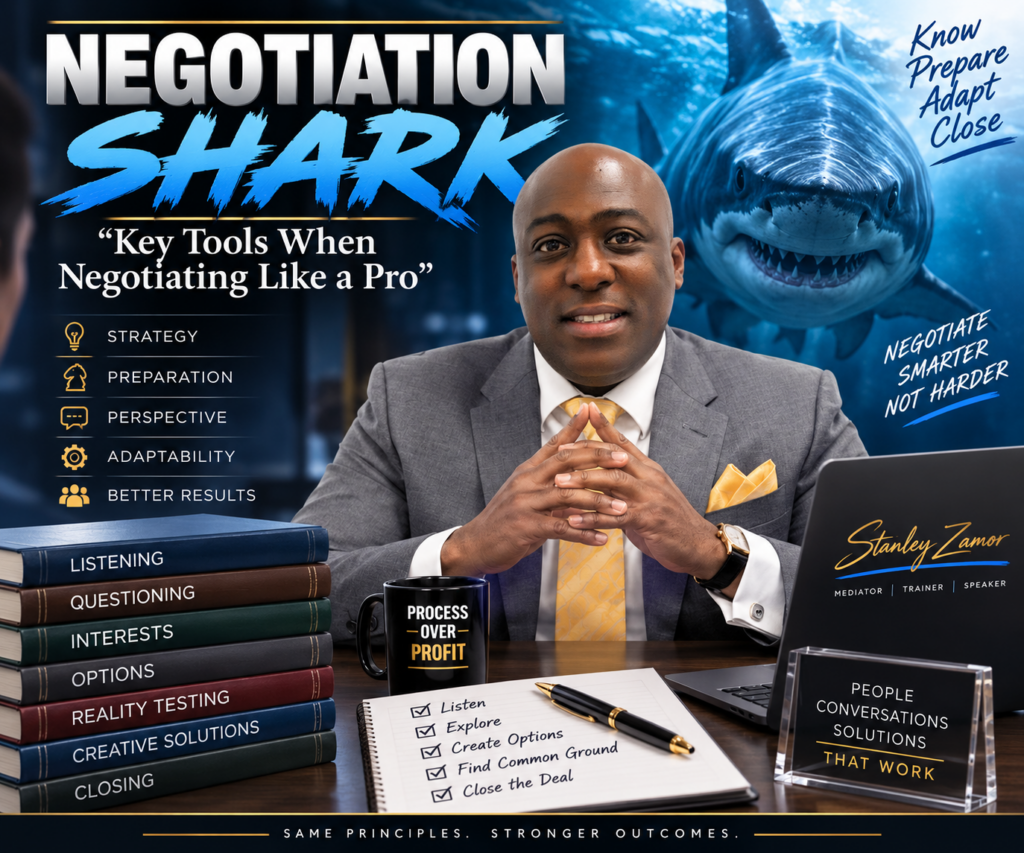







 Negotiating like a professional is not about being the loudest person in the room, making the toughest demand, or refusing to move. In fact, some of the best negotiators I have encountered over the years rarely appear to be “winning” the negotiation.
They are listening. Watching. Asking questions. And most importantly, they are gathering information.
As I discussed in “An Offer They Can Understand: Mediation Lessons Through the Lens of The Godfather,” effective negotiation requires understanding people—what they fear, what they value, what they need, and what may be preventing them from making a different decision.
So, what tools should every skilled negotiator have available?
1. Active Listening — Listen for What Wasn’t Said
Too many people listen only long enough to prepare their response. Professionals listen for information.
What is driving the demand? What keeps being repeated? What issue creates the strongest emotional reaction? And perhaps most importantly—what are they not saying?
Positions tell you what someone wants. Interests often tell you why they want it. The “why” is where opportunities are found.
2. Strategic Questions — Stop Making Statements
Questions can be more powerful than arguments.
“What would resolving this today allow you to avoid?”
“What is most important about that number?”
“What would have to change for you to consider another option?”
Good questions create dialogue without requiring agreement. They also allow people to examine their own assumptions rather than simply defend them.
3. Reframing — Change the Conversation
When negotiations become personal, progress usually slows.
A professional negotiator knows how to shift the conversation from blame to problem-solving, positions to interests, and past injuries to future possibilities.
Reframing does not minimize the conflict. It simply presents the conflict in a way that makes resolution easier to explore.
4. Timing — Know When NOT to Make the Move
Every concession does not require an immediate response.
Silence is a tool. Patience is a tool. Timing is a tool.
Sometimes people need to process information, experience the discomfort of uncertainty, or recognize the consequences of maintaining their current position. Moving too quickly can communicate desperation and eliminate opportunities for reflection.
5. Know Your BATNA — And Understand Theirs
Before negotiating, understand your Best Alternative to a Negotiated Agreement.
What happens if there is no deal?
What will litigation, delay, expense, uncertainty, damaged relationships, or lost opportunities actually cost?
More importantly, try to understand the other side’s alternatives as well. Leverage is rarely found in the demand itself; it is often found in understanding what happens when the answer is “No.”
Professional negotiation is not about forcing someone to accept your offer.
It is about creating an offer they can understand—one that responds to interests, acknowledges risk, preserves dignity, and gives people a rational reason to say yes.
“Conflict is inevitable, so is the resolve…” — Stanley Zamor
Stanley Zamor is a Florida Supreme Court certified circuit/family/county mediator and primary trainer and qualified arbitrator. Zamor serves on several federal and state mediation/arbitration rosters and mediates with Salmon and Dulberg. As an ADR consultant/professional he regularly lectures on a variety of topics from ethics to family/business relationships. ZamorADRExpert@gmail.com ; www.effectivemediationconsultants.com; www.LinkedIn.com/in/stanleyzamoradr. (954) 261-8600
