







By Hannah Spence
While many people wait for major symptoms to appear before seeking medical care, the University of Miami Comprehensive Center for Brain Health in Boca Raton is shifting focus toward proactive, preventative care for neurocognitive diseases.
The team consists of 42 people who work collaboratively in varying roles such as clinicians, coordinators, research associates, laboratory personnel and post docs.
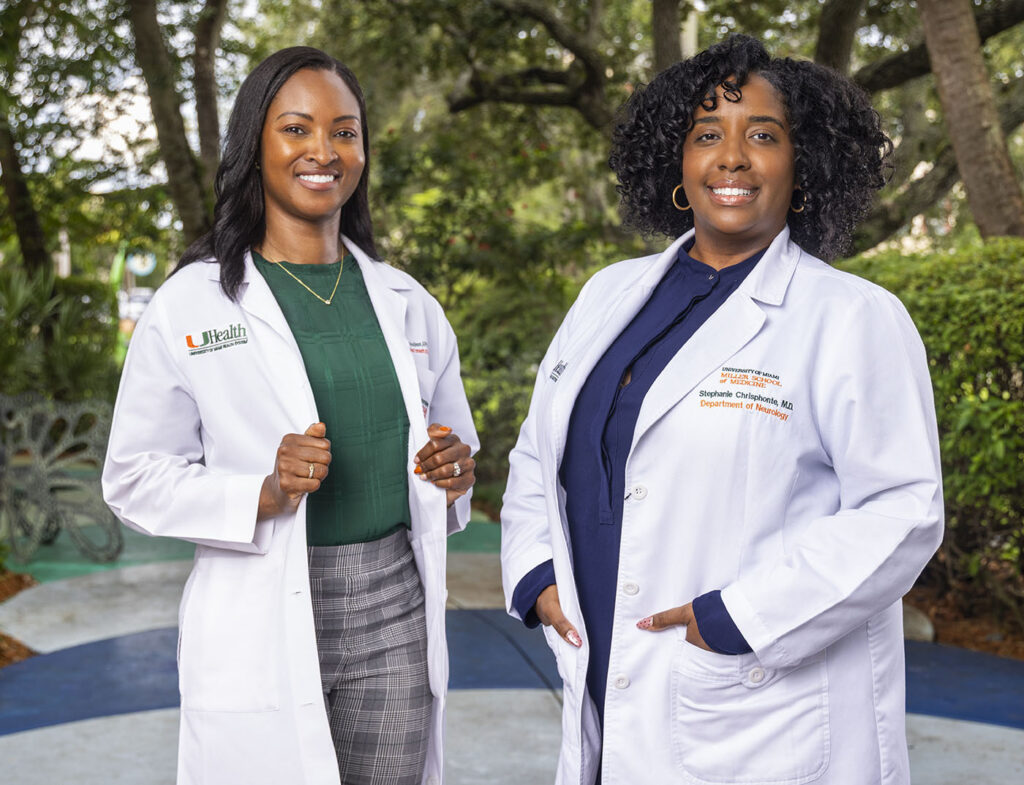
Senior members of the team include Associate Director for Operations Dr. Stephanie Chrisphonte and Nurse Practitioner Marcia Walker. Chrisphonte is also a professor of neurology at UM who has been with the center for over 10 years. Walker worked in hospitals for 12 years before coming to work for the center in October 2017.
“A lot of people think that as they get older, they’re just supposed to be forgetful-that’s not true,” said Chrisphonte. “Because Alzheimer’s is not a natural part of aging. Dementia is not a natural part of aging.”
The office runs several research initiatives, including observational studies for individuals with healthy cognition to mild dementia, and clinical trials spanning the entire spectrum of the disease.
If findings from the comprehensive research evaluation indicate that a participant may benefit from traditional clinical care, participants will be provided with information and resources regarding appropriate healthcare providers within the University of Miami Health System and the broader community.
Central to the center’s current research is the Healthy Brain Initiative, which aims to identify distinct participant profiles and generate personalized brain health recommendations through the analysis of lifestyle behaviors alongside objective health metrics.
As part of the study, participants visit a few times a year to undergo comprehensive cognitive and physical assessments. After diving into their specific health markers, they receive a research assessment conclusion and tailored lifestyle recommendations. Dr. Chrisphonte noted that CCBH aims to support these participants indefinitely, pending continued funding.
“Under the leadership of Dr. James E. Galvin, our researchers have developed and validated several cognitive screening tools such as the Resilience Index, that help clinicians identify dementia and mild cognitive impairment earlier and more accurately,” said Walker, who often shares these breakthroughs with her own elderly mother.
“These tools include deep phenotyping, cognitive testing, imaging, and lifestyle assessments to create personalized brain health interventions.”
While exact requirements vary by study, general participants must be at least 50 years old, under regular medical care, have stable medical conditions, and be able to read and write English or Spanish.
“I think so much about dementia is people feeling like they’re losing their autonomy or losing their ability to choose or feeling like others are judging them. So sometimes they don’t share it,” said Chrisphonte. “But I don’t want that for people. I want people to treat it the same way they would treat a cold. So, removing that discomfort associated with dementia is something I hope to do.”
