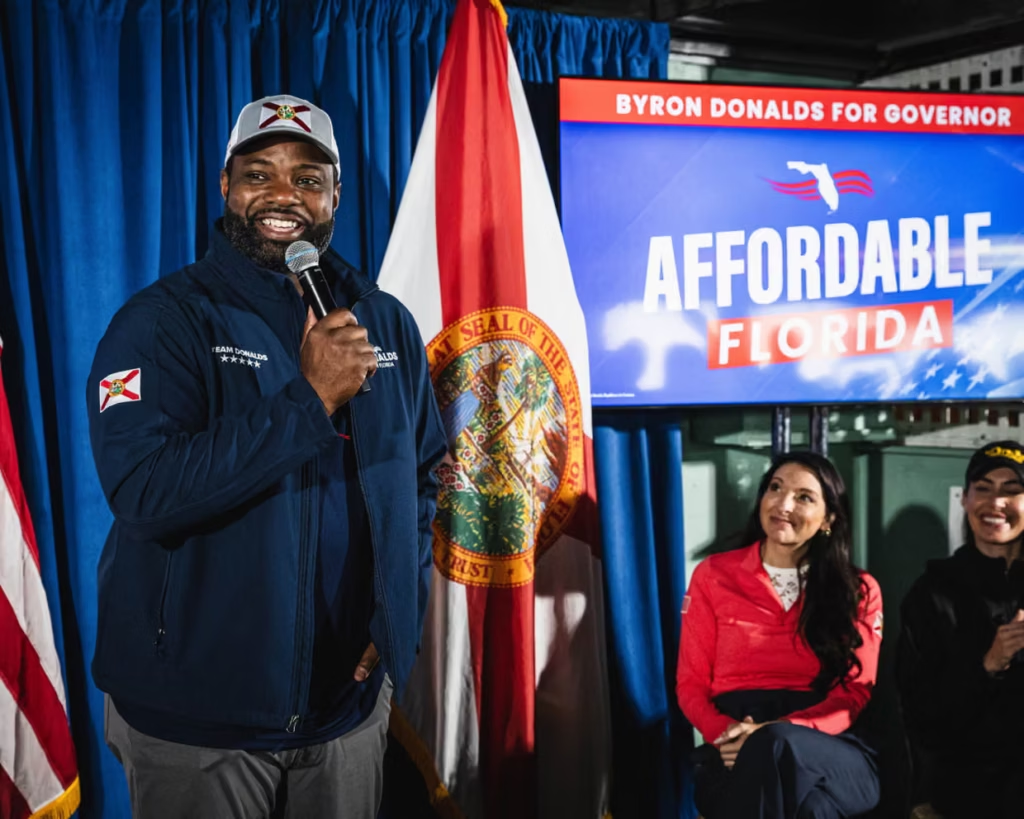




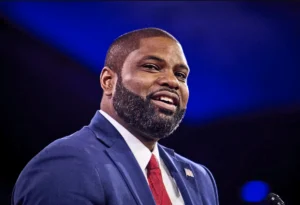
With Byron Donalds making history as Florida’s first Black governor, Republican leaders have an opportunity to lower costs, expand business ownership and create wealth. But will their policies reach communities that have historically been left behind?
By Jordan Mitchell | M•I•A MEDIA GROUP
Florida Republicans emerged from Tuesday’s midterm elections with a powerful political mandate, securing the governor’s office, U.S. Senate seat and major statewide executive positions. Their victories could reshape the state’s economy through tax relief, reduced regulations, insurance reform and business development initiatives.
For Black Floridians, the election raises an important question: Will Republican control of state government translate into greater economic security, business ownership and wealth creation for communities that have historically faced barriers to prosperity?
Republican Byron Donalds’ election as Florida’s first Black governor represents a historic breakthrough. His victory, combined with the election of Attorney General James Uthmeier, Chief Financial Officer Blaise Ingoglia and Agriculture Commissioner Wilton Simpson, positions Republicans to advance a coordinated economic agenda.
Republican Ashley Moody’s U.S. Senate victory also strengthens the party’s representation in Washington, where federal decisions involving taxation, housing, healthcare and small-business development can influence Florida’s economy.
The potential benefits for Black communities are substantial. But realizing them will require policies that address the economic challenges facing working families and entrepreneurs rather than assuming that statewide prosperity automatically reaches every neighborhood.
Donalds’ Economic Agenda Could Open Doors
Donalds has consistently emphasized lower taxes, reduced government regulations, business expansion and merit-based economic opportunity.
His approach reflects the Republican belief that a competitive business environment encourages investment, job creation and entrepreneurship.
For Black-owned businesses, reducing unnecessary licensing requirements, simplifying government procedures and lowering operating expenses could make it easier to establish and expand companies.
Small businesses across Miami-Dade, Broward and Palm Beach counties continue confronting rising commercial rents, insurance premiums, labor costs and financing challenges.
Policies that reduce these expenses could allow entrepreneurs to reinvest profits, hire employees and strengthen their financial positions.
Donalds’ administration could also expand workforce training, apprenticeships and partnerships with private employers, creating pathways into higher-paying careers for residents without four-year college degrees.
However, the effectiveness of these initiatives will depend on whether opportunities reach underserved communities and businesses with limited financial resources.
Property Tax Relief Could Strengthen Black Homeownership
One of the most immediate potential economic benefits comes from Amendment 3, which Florida voters approved Tuesday.
The measure expands property tax exemptions for qualifying homeowners, offering the possibility of meaningful savings for families struggling with rising housing expenses.
For Black homeowners in communities such as Miami Gardens, Lauderhill, Lauderdale Lakes and Riviera Beach, lower property taxes could provide additional money for household necessities, home improvements, retirement savings or investments.
Reducing the financial burden of homeownership could also help some families remain in neighborhoods experiencing rising property values.
But the benefits come with a significant concern.
Lower property tax collections could reduce revenue available to local governments for infrastructure, public safety, parks and other community services.
Renters, who do not receive direct homestead tax benefits, may experience fewer financial advantages.
The challenge for Republican leaders will be balancing homeowner relief with the financial stability of cities and counties.
Insurance Reform Could Deliver Meaningful Savings
Florida’s high property insurance costs remain one of the greatest financial pressures facing homeowners and small-business operators.
For Black families working to build generational wealth through homeownership, rising premiums can undermine financial stability and make properties increasingly difficult to maintain.
Chief Financial Officer Blaise Ingoglia will have an important role in state financial oversight and insurance-related matters.
Efforts to improve insurance affordability, increase market competition and strengthen consumer protections could benefit homeowners and businesses throughout South Florida.
Lower premiums could also help Black entrepreneurs who operate restaurants, retail establishments, construction companies and other businesses requiring substantial insurance coverage.
The economic benefits would be particularly meaningful if reforms produce measurable premium reductions rather than simply expanding insurance company profitability.
Black-Owned Businesses Could Benefit From Expanded Contracting Opportunities
Government procurement represents another potential opportunity. Florida spends substantial public resources on construction, transportation, technology, professional services and infrastructure projects.
Expanding access to those contracts could help Black-owned companies increase revenue, create employment and develop long-term financial stability.
Donalds has expressed support for merit-based competition while opposing government-funded diversity, equity and inclusion initiatives.
Supporters argue that removing racial preferences can create a more consistent and transparent system for awarding contracts.
However, Black entrepreneurs have historically encountered obstacles involving access to capital, bonding capacity and established contracting relationships.
A merit-based procurement system could benefit qualified Black businesses if the state also removes unnecessary financial barriers and expands technical assistance.
Programs offering small-business financing, bonding support, procurement training and access to contracting information could improve competitiveness without guaranteeing awards based on race.
The administration’s willingness to pursue those policies will help determine whether its economic philosophy produces broader participation.
Workforce Development Could Expand Economic Mobility
Republican economic priorities also emphasize workforce readiness and career training.
Investments in technical education, apprenticeships and industry partnerships could create opportunities for Black residents seeking employment in healthcare, construction, aviation, technology and skilled trades.
South Florida’s expanding economy offers potential employment opportunities, but access to training and professional advancement remains uneven. Programs connecting residents with employers, industry certifications and career pathways could help increase household incomes.
For younger Black Floridians, stronger connections between education and employment could provide alternatives to low-wage jobs and improve long-term financial security.
The greatest benefits would come from programs that prepare residents for careers offering competitive wages, benefits and opportunities for advancement.
Economic Growth Must Reach Black Neighborhoods
Florida’s Republican leaders will inherit an economy with substantial strengths, including tourism, international trade, construction, technology and population growth.
Yet economic expansion has not eliminated disparities in household wealth, business financing and homeownership.
For communities such as Liberty City, Overtown, Miami Gardens, Lauderhill and Riviera Beach, the central issue is whether statewide investment will translate into neighborhood-level prosperity.
Business development incentives, infrastructure improvements and workforce programs could help attract investment to historically underserved areas.
However, without measurable accountability, economic development can bypass the residents and entrepreneurs who need it most.
The Donalds administration could demonstrate its commitment to broad-based prosperity by tracking Black business participation in state contracts, access to financing, homeownership trends, employment growth and household income.
Those measurements would provide a clearer picture of whether Republican economic policies are expanding opportunity.
Historic Victories Create a Historic Responsibility
Florida Republicans now have an opportunity to demonstrate that their economic philosophy can deliver measurable improvements for communities across racial and political lines.
Lower taxes could help eligible homeowners retain more income. Insurance reform could reduce household and business expenses. Regulatory changes could make entrepreneurship more accessible. Workforce development could connect residents with better-paying careers.
But those outcomes are possibilities, not guarantees.
For Black Floridians, the challenge is ensuring that economic policies address longstanding barriers to opportunity while encouraging investment, innovation and personal responsibility.
Donalds’ election as Florida’s first Black governor carries extraordinary historical significance. His economic legacy, however, will be determined by whether his administration improves the financial circumstances of the communities whose history he now represents.
Florida Republicans have won the political power to reshape the state’s economy. Their greatest opportunity is to demonstrate that prosperity can extend beyond established businesses, wealthy neighborhoods and traditional centers of economic influence.
For Black families and entrepreneurs, the ultimate measure of success will not be Republican victories on Election Night.
It will be whether more families can afford homes, more businesses can secure contracts, more workers can obtain higher-paying jobs and more communities can build lasting generational wealth.
The election gave Republicans control of Florida’s economic future. Now they must demonstrate that Black Floridians have a meaningful place in that future.
