




By Jonathan Ellis | M•I•A MEDIA GROUP
WASHINGTON — America’s political landscape underwent a historic transformation Tuesday as Black and Hispanic candidates shattered longstanding barriers to win governorships in some of the nation’s most influential states. Their victories represent more than individual political achievements. They signal a changing electorate, expanding political influence among communities of color and a new chapter in the struggle for representation at the highest levels of state government.
From Florida to Georgia, Texas and California, the 2026 midterm elections produced milestones that would have seemed improbable just a generation ago.
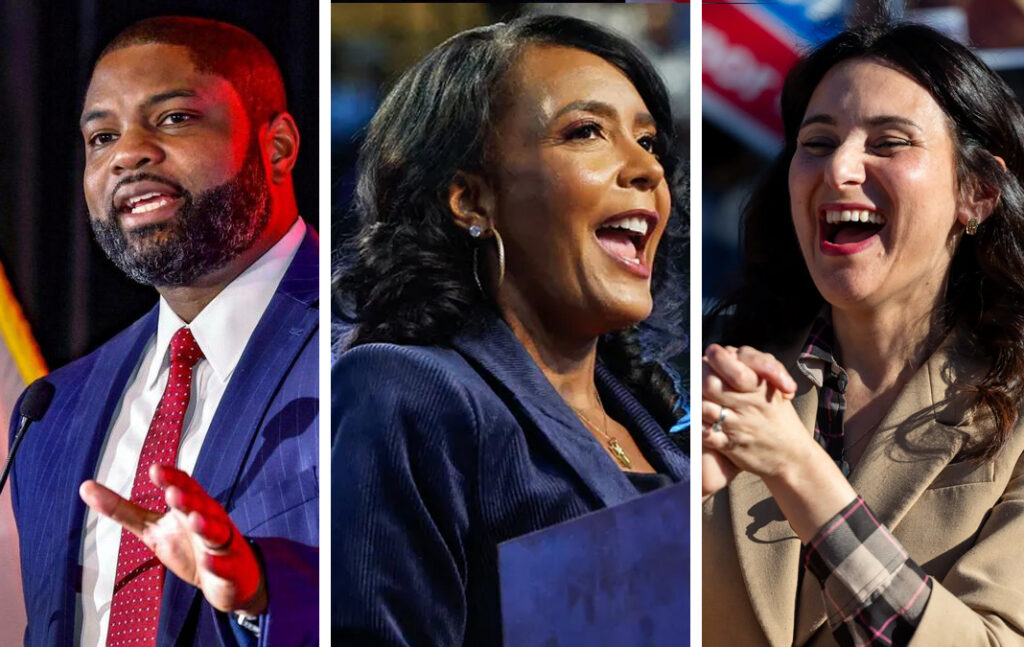
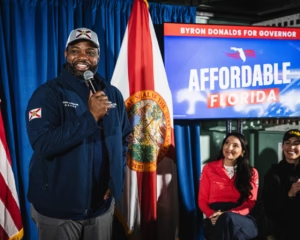
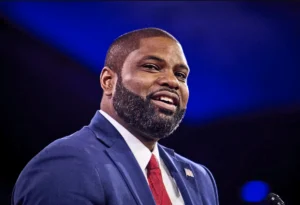
Republican Byron Donalds became Florida’s first Black governor, while Democrat Keisha Lance Bottoms became the first Black woman elected governor in American history. In Texas, Democrat Gina Hinojosa defeated Republican Gov. Greg Abbott to become the state’s first Hispanic governor, while Xavier Becerra became California’s first directly elected Latino governor.
Their victories are historically significant. But their political philosophies, priorities and approaches to governing reveal that racial and ethnic representation does not necessarily produce a unified political agenda.
The larger question is whether these groundbreaking elections will translate into meaningful improvements in the lives of the communities whose histories they represent.
Black Political Leadership Reaches New Heights
Donalds’ victory in Florida is particularly significant because he becomes the nation’s first elected Black Republican governor.
A strong supporter of President Donald Trump, Donalds campaigned on conservative economic principles, tax reductions, school choice and reducing government regulations.
His election challenges the longstanding perception that Black political advancement must occur primarily through the Democratic Party. However, his opposition to government-funded diversity, equity and inclusion programs places him at odds with many traditional civil rights organizations.
For Black Floridians, particularly in South Florida, the effectiveness of his administration will likely be judged by its response to housing affordability, rising insurance costs, educational disparities and access to business opportunities.
In Georgia, Bottoms’ victory represents a different political milestone.
The former Atlanta mayor defeated Republican Rick Jackson, returning the governor’s office to Democratic control after decades of Republican dominance.
Her election as the nation’s first Black woman governor carries particular significance for Black women, who have long served as influential political organizers, voters and community leaders while remaining underrepresented in the nation’s highest executive offices.
Bottoms now has an opportunity to address economic inequality, healthcare access, voting rights and public education in a state where racial and economic disparities remain substantial.
The contrast between Donalds and Bottoms illustrates an important development: Black political leadership is expanding across party lines, offering voters different visions of how government should address opportunity and inequality.
Hispanic Political Power Reshapes Texas and California
The victories of Hinojosa and Becerra demonstrate the growing influence of Hispanic political leadership in two of America’s largest states.
In Texas, Hinojosa’s defeat of Abbott ended decades of Republican control of the governor’s office. Her campaign focused heavily on rising living costs, public education and the economic pressures confronting working families.
Her victory suggests that Hispanic voters, while far from politically uniform, can play a decisive role when candidates address economic concerns that transcend racial and ethnic divisions.
California’s election of Becerra carries equally significant implications.
A former congressman, California attorney general and U.S. secretary of health and human services, Becerra brings extensive government experience to a state confronting severe housing affordability problems, healthcare challenges and immigration disputes. Although California previously had a Latino governor, Romualdo Pacheco, who assumed office in 1875, Becerra is the first Latino directly elected to the position.
For Hispanic communities, these victories could create new opportunities for political participation and greater attention to issues involving education, immigration, small-business development and economic mobility.
But their success will depend on whether campaign commitments become effective public policy.
The Economic Impact Could Be Far-Reaching
Governors exercise considerable influence over state budgets, economic development programs, public education, transportation, healthcare and government contracting.
That authority gives these newly elected leaders an opportunity to address longstanding economic disparities.
For Black and Hispanic entrepreneurs, greater access to government contracts, affordable financing and workforce development programs could create pathways to business expansion and wealth creation.
Housing policy will be another critical measure.
Across Florida, Georgia, Texas and California, families are confronting rising housing costs that threaten homeownership and financial stability.
Policies that expand affordable housing, reduce unnecessary development barriers and improve access to homeownership could have lasting effects on communities historically excluded from wealth-building opportunities.
Healthcare will also remain a defining issue, particularly in states where uninsured residents and medically underserved communities face significant obstacles to receiving affordable treatment.
Yet there is no guarantee that governors who share the racial or ethnic backgrounds of underserved communities will pursue identical policies.
Their governing records, rather than their identities alone, will determine the impact of their leadership.
A New Generation of Political Possibilities
The 2026 election also sends a powerful message to younger Americans. For Black and Hispanic students who rarely saw people resembling themselves occupying the highest offices in state government, these victories expand their understanding of what is politically possible.
They demonstrate that political leadership can emerge from different backgrounds, parties and ideological traditions.
The results also create new challenges for both major political parties. Republicans must determine whether Donalds’ success can help build lasting relationships with Black voters beyond a single election.
Democrats must demonstrate that historic victories by Bottoms, Hinojosa and Becerra can produce tangible results for working families rather than relying solely on the symbolic importance of representation.
Both parties will face increasing pressure to address economic concerns, protect democratic institutions and respond to communities demanding measurable progress.
History Has Been Made. Now Comes the Test of Leadership.
The election of these governors marks an extraordinary moment in American political history.
Barriers that once restricted access to executive leadership have fallen, creating new possibilities for future generations.
But representation, however historic, is only the beginning.
The true measure of progress will not be the number of political firsts recorded on Election Night. It will be whether those elected leaders reduce economic inequality, strengthen public education, expand access to healthcare, protect civil rights and create opportunities for families seeking a better future.
For Black and Hispanic Americans, political representation must ultimately become more than a source of pride. It must become a pathway to greater influence, economic security and lasting institutional change.
America has witnessed a historic transformation in who can become governor. The next and far more consequential question is whether that transformation will change who benefits from the power of government. Breaking barriers makes history. Breaking cycles of poverty, inequality and exclusion creates a legacy.
And that is the standard by which this new generation of governors should be judged.