






 When preparing to mediate, parties often spend significant time selecting the “most experienced” neutral. They look at years of litigation, judicial appointments, verdict history, or the prestige of what a resume/curriculum vitae demonstrate. But mediation was never designed to be a continuation of litigation by another name.
The real question is not simply who knows the law best.
The question is: Who understands conflict best, and how to create an opportunity to amicably address/resolve a dispute?
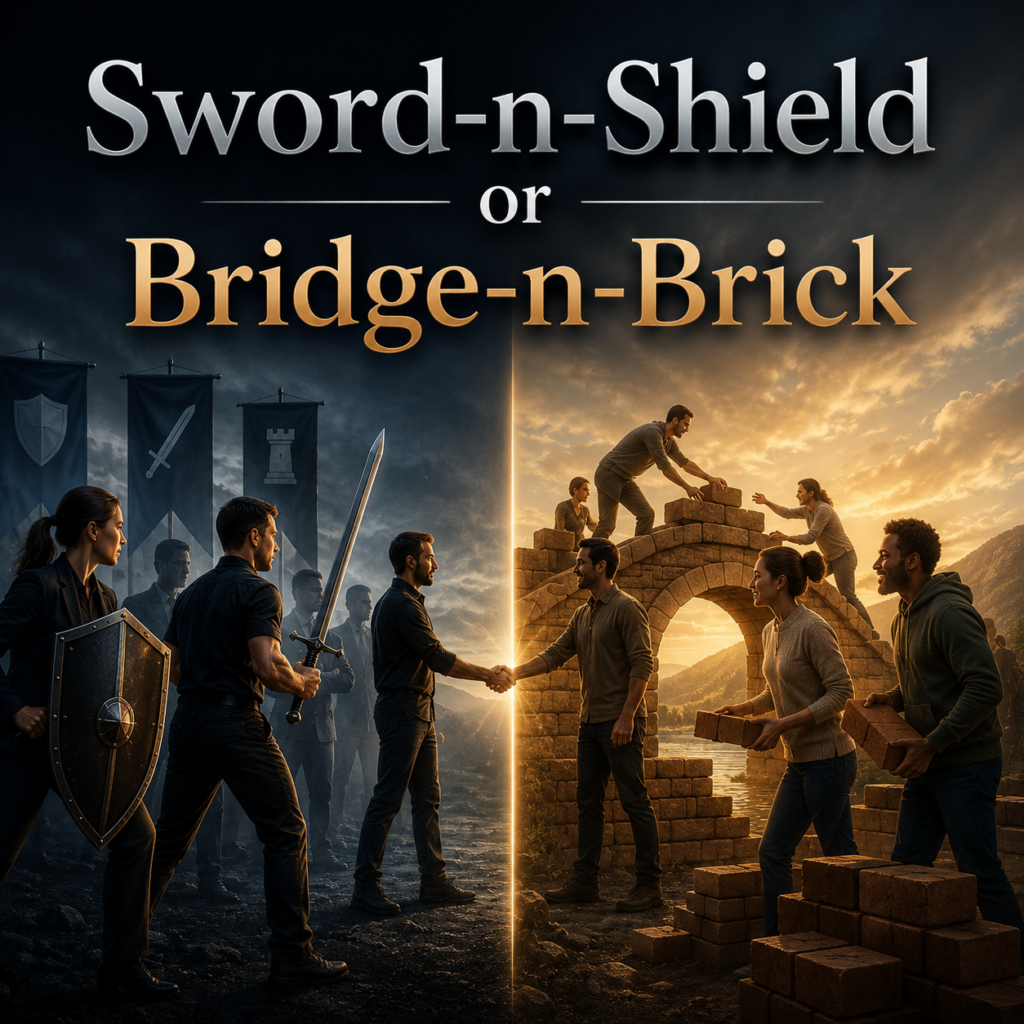
Too often, the mediation consumers reward the “sword-n-shield” mindset — a system rooted in positional leverage, predictive analysis, authority, and adversarial conditioning. Rarely concerned that it often violates procedural ethics and party self-determination. While those skills may have value in litigation, mediation requires something fundamentally different and much more. It requires the ability to build dialogue where communication has collapsed. It requires emotional intelligence, patience, strategic listening, encouraging empowerment and the discipline to protect party self-determination even when tension rises.
Mediation is not supposed to become a shadow courtroom.
This is where the “bridge-n-brick” philosophy becomes essential. A skilled neutral is not merely attempting to predict outcomes or pressure concessions. A true mediator is constructing opportunities for understanding, empowerment, reframing conflict, restoring communication, relationship building and helping participants move from entrenchment toward intentional decision-making.
Every word, pause, caucus, and question becomes a brick placed carefully toward resolution.
The challenge facing the ADR profession today is that many still confuse litigation experience with mediation competency. They are not the same discipline. Trial advocacy teaches persuasion. Conflict resolution teaches transformation and amicable resolve. One prepares professionals to win positions. The other prepares neutrals to manage human dynamics, emotions, perception, identity, and communication breakdowns.
That distinction matters.
The Florida Rules for Certified and Court-Appointed Mediators remind us that mediation is a voluntary, party-centered process grounded in neutrality, impartiality, empowerment and self-determination. Those principles cannot survive if the process becomes dominated by ego, predictive pressure, or evaluative influence disguised as facilitation.
The promise of mediation was never about manufacturing settlements at all costs. It was about creating a process where people could make informed, empowered, and authentic decisions for themselves.
That requires more than a résumé.
It requires intention-trained conflict-resolution practitioners who understand that the mediator’s greatest power is not authority — it is influence earned through trust, credibility, emotional discipline, and integrity…”process-over-profit.”
The future of ADR will belong to those who can build bridges, not merely carry shields.
Stanley Zamor is a Florida Supreme Court certified circuit/family/county mediator, primary trainer and qualified arbitrator. Zamor serves on several federal and state mediation/arbitration rosters and mediates with Salmon and Dulberg. As an ADR consultant/professional he regularly lectures on a variety of topics from ethics to family/business relationships. To calendar time with Stanley visit: https://sd-adr.com/attorney/stanley-zamor/ ; email: ZamorADRExpert@gmail.com ; www.effectivemediationconsultants.com; www.LinkedIn.com/in/stanleyzamoradr. (954) 261-8600
