





By Adrian Cole | M•I•A MEDIA GROUP
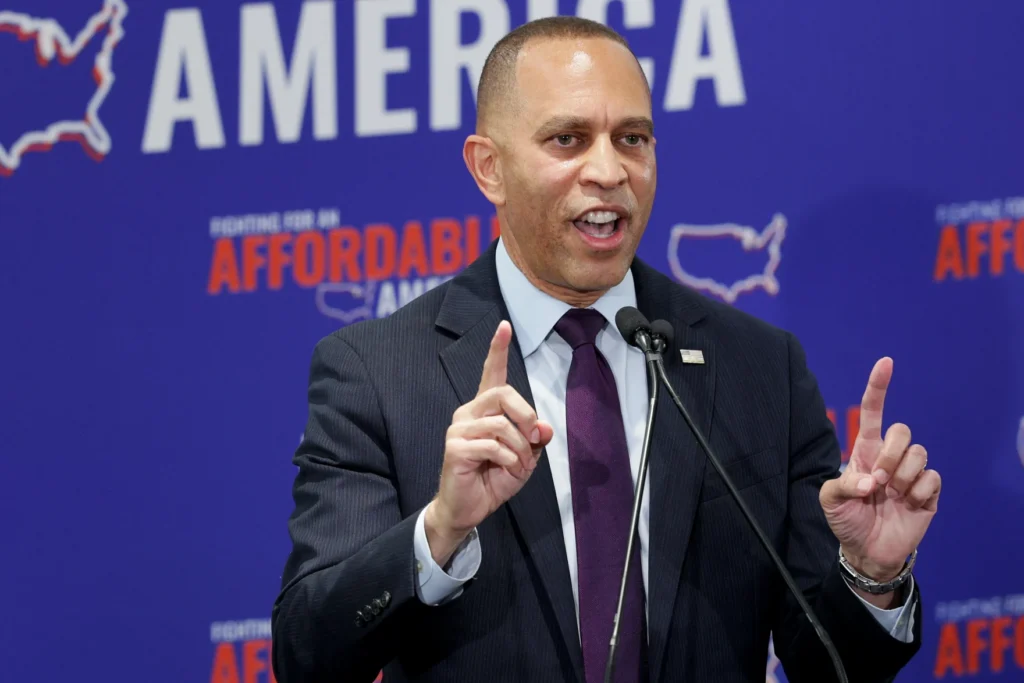
WASHINGTON — Hakeem Jeffries is within reach of a milestone no Black American has achieved: becoming speaker of the U.S. House of Representatives, wielding the gavel in a chamber that has shaped the nation’s struggles over slavery, citizenship and civil rights.
With Democrats winning control of the House in the Nov. 3 midterm elections, the New York congressman is strongly positioned to become speaker when the next Congress convenes Jan. 3. His election would place a Black lawmaker at the head of the House for the first time in its history.
Jeffries formally announced his candidacy Nov. 4, asking fellow Democrats to support his bid and outlining an agenda centered on affordability, accountability and American values.
His chances are strong, but the outcome is not automatic. Democrats must first select their nominee, followed by a vote of the full House in January. The party’s leadership elections are scheduled for Nov. 18. A Democratic majority gives Jeffries a clear path, provided he maintains sufficient support among his colleagues.
Former Speaker Nancy Pelosi has publicly endorsed that path, praising Jeffries’ judgment and leadership following the election. Her support underscores the continuity between the woman who broke the speakership’s gender barrier and the man now positioned to break its racial barrier.
Jeffries has already made congressional history. Chosen to lead House Democrats in 2022, he became the first Black person to lead a major political party in Congress when he assumed the position in January 2023. Becoming speaker would move him from directing the opposition to leading the chamber itself.
The significance extends beyond representation. The speaker helps shape the legislative agenda, directs the majority’s strategy and holds substantial influence over negotiations on federal spending and national priorities. The office also stands second in the presidential line of succession, behind the vice president.
For Black communities, a Jeffries speakership would carry particular symbolic weight: leadership of an institution where generations fought to secure equal citizenship, voting rights and political representation. That symbolism would come with expectations for measurable results.
In his announcement, Jeffries identified housing, health care, groceries, energy and caregiving costs as priorities. He also called for restoring food assistance funding and reversing Medicaid cuts — proposals that would require navigating Congress and confronting President Donald Trump’s opposition.
For South Florida residents, those debates reach directly into household budgets. The practical measure of his leadership would be whether legislative negotiations produce more affordable care, stronger economic security and meaningful oversight.
Even with Democrats controlling Congress, Jeffries would face limits. Trump retains the veto, and a House majority cannot independently turn its agenda into law. Holding Democrats together while negotiating across institutional and ideological divisions would become a defining test.
Jeffries’ opportunity is therefore both historic and demanding. Winning the gavel would establish a first for Black America. What he accomplishes with it would determine the broader legacy.
