







By Simone Carter | M•I•A MEDIA GROUP
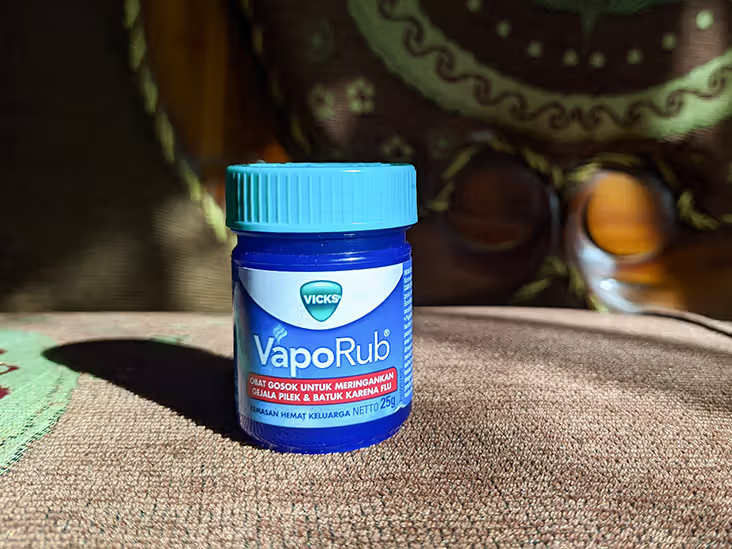
For some Black families, the smell of Vicks VapoRub brings back a familiar scene. A child is coughing at bedtime, and someone reaches for the little blue jar. Depending on who was taking care of you, the ointment might have gone on your chest, under your nose or on the soles of your feet before someone pulled on a pair of socks.
Those rituals were one way families cared for a sick child, and versions of them have traveled through households of many backgrounds. But where you put the ointment matters. For a cough from a common cold, the U.S. label for original Vicks VapoRub directs adults and children 2 and older to apply it to the chest and throat. Children younger than 2 should never use it.
Where the rub belongs
For temporary cough relief, rub a thick layer onto intact skin on the chest and the outside of the throat. Keep clothing loose around those areas so the vapors can reach the nose and mouth. You can cover the area with a warm, dry cloth if you like. Use it up to three times a day unless a doctor directs otherwise. The label also lists a separate use for temporary relief of minor muscle and joint aches.
If you grew up with the feet-and-socks routine, the soles of the feet are outside the label directions for treating a cough. Putting the ointment under the nose raises a different concern. Mayo Clinic advises keeping it away from the nostrils, especially in young children. Camphor, one of the active ingredients, can be absorbed through mucous membranes or broken skin and can be toxic. Keep the ointment away from the eyes, too.
Why it feels like your nose has cleared
Menthol creates a cooling sensation that can make breathing feel easier even while the nose remains congested, according to Mayo Clinic. That helps explain why a dab under the nose may have seemed effective. For a child with a stuffy nose, Mayo Clinic suggests options such as saline nose drops or spray and a cool-mist humidifier.
The label also warns against heating the ointment, microwaving it or adding it to hot water. It can splatter and cause burns. Keep the jar out of children’s reach. If anyone swallows the ointment, call Poison Control right away at 800-222-1222. Camphor poisoning can cause seizures.
A cough that lasts more than a week, keeps coming back or comes with fever, a rash or a persistent headache is a reason to stop using the rub and contact a doctor, according to the label. If the cough produces a lot of mucus or is chronic, check with a doctor before using it.
Grandma had the right spot if she rubbed it on your chest and throat. That’s the part of the bedtime routine worth passing down, along with one detail that’s easy to forget when a little one is sick. Check their age before you open the jar.
