




By Jordan Ellis | M•I•A MEDIA GROUP
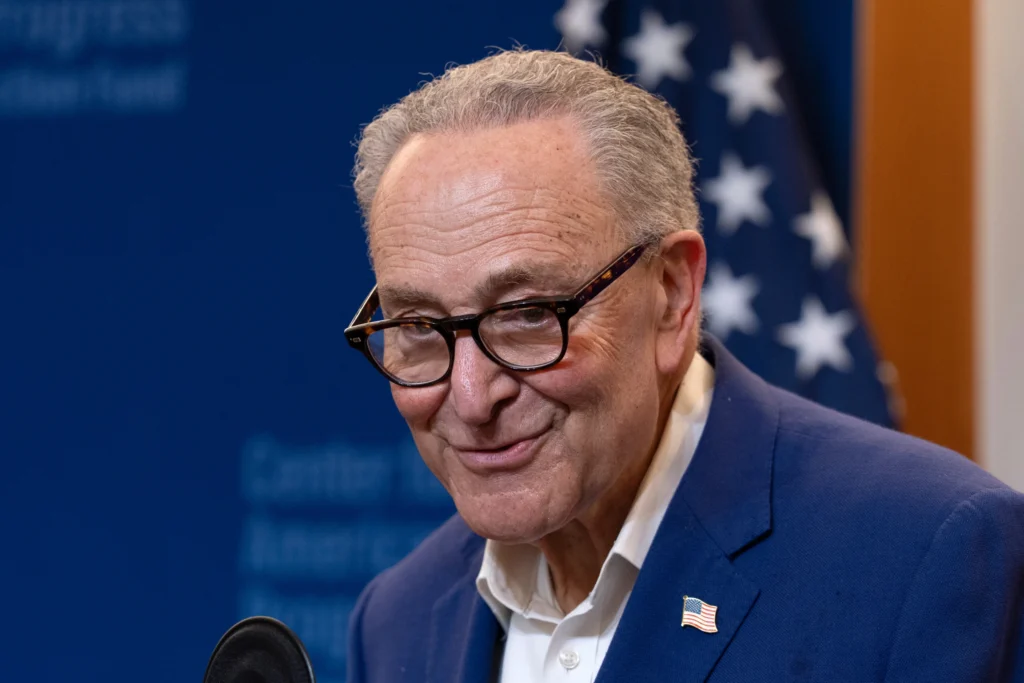
WASHINGTON — Senate Democrats won control of the chamber in Tuesday’s midterm elections, putting Chuck Schumer in position to reclaim the majority leader’s office. But the victory has also given some members of his own caucus an opening to ask whether the New York senator is the right person to decide how Democrats use their new power.
Schumer remains the favorite. He has led Senate Democrats for a decade, and no senator had publicly launched a challenge as of Sunday. Still, two sitting senators declined to endorse him at a postelection gathering Saturday in Washington, and several incoming Democrats withheld their support during their campaigns. Their reluctance has made the leadership election an early test of how much influence the party’s newest senators will have.
Maryland Sen. Chris Van Hollen said Democrats should discuss how they intend to exercise their authority before choosing a leader. Michigan Sen. Elissa Slotkin also withheld her endorsement and left open the possibility of running herself. The two senators’ remarks brought a debate usually held behind closed doors into public view just days after the election.
Some of the skepticism dates to March 2025, when Schumer voted to advance a Republican spending bill to avert a government shutdown. Progressive activists argued that Democrats had surrendered leverage at a moment when they should have confronted President Donald Trump. Schumer subsequently regained standing with colleagues, according to interviews the Associated Press conducted with more than a dozen Democratic senators before the election. The midterm victory strengthened his case.
The shift from minority to majority changes what senators can reasonably expect from their leader. Democrats will have more control over which measures reach the floor and how the Senate handles Trump’s nominees. Those powers will force choices about what to prioritize, where to seek agreement and when to use the Senate’s authority to block the president’s agenda.
Schumer offered a preview Thursday, telling the Associated Press that Senate Democrats would oppose a right-wing Supreme Court nominee if a vacancy arises. He left open how far he would go, declining to say whether he would keep a seat vacant through the next presidential election. That distinction is likely to matter to Democrats who want to know how he would turn a public pledge into a strategy.
Senate Democrats will choose their leader by secret ballot. That gives members room to express reservations publicly and make their decision privately. Schumer’s advantage is that many colleagues already know how he operates under pressure, and a potential challenger would have to persuade a majority that the party needs a different approach just as it regains control.
For now, the dispute centers on what Schumer would do with the job. His critics are asking for commitments before casting their votes. If he wins, the first consequential fights over spending, legislation and nominations will show how much those demands shaped the agenda Democrats take into the new Congress.
