






 For most of human history, doctors believed disease traveled through bad air. The logic made sense. Sickness clustered around foul-smelling places. So physicians warned patients to avoid the stench. They were not wrong about the correlation. They were catastrophically wrong about the cause.
That pattern, defending a confident assumption until the evidence becomes impossible to ignore, is not a historical curiosity. It is a permanent feature of organizational life. And it is the single greatest obstacle to transformation.
The hardest part of building the future is not the technology. It is letting go of the story you have been telling about how things work.
Proof From an Unlikely Place
Consider what has been happening quietly in the woodworking industry. For generations, the assumption governing a workshop was fixed: blades are dangerous, injury is a human problem, and building a home takes weeks of coordinated on-site labor.
Every one of those assumptions is now being overturned. SawStop built a table saw that detects human skin and retracts the blade in five milliseconds. The old assumption said the worker’s attention was the last line of defense. SawStop discarded it and asked instead: what if the machine bears the responsibility? Altendorf went further, using dual cameras and AI to predict danger before contact occurs, making safety proactive rather than reactive.
Then there is Automated Architecture, a UK company whose robotic micro-factory ships to any building site and produces all the timber panels for a home in eight hours, reducing labor by up to 75 percent and cutting costs by 30 to 40 percent. The old assumption was that a home is built on site. AUAR asked what would happen if it was manufactured first, then assembled.
None of these breakthroughs came from a bigger budget. They came from people willing to question a premise that everyone else had stopped questioning.
The Question Worth Asking
Your organization has those same assumptions. They live inside your operating model, your hiring practices, your definition of what business you are actually in. They feel like common sense because everyone around you holds them too. That is precisely what makes them dangerous.
The organizations transforming fastest today are not the ones with the most technology. They are the ones with the clearest view of which assumptions to challenge first. The table saw did not need a better blade guard. It needed someone willing to question whether a blade guard was the right answer at all.
The future belongs to the organizations brave enough to name the assumption, not just update the tool.
The question for every leader is not whether your industry is being disrupted. It is. The question is whether you are the one willing to name what needs to be let go, before the market names it for you.
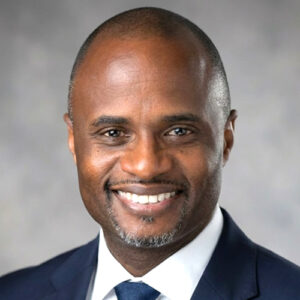
Marvin Dejean is the CEO and senior managing partner of Gilead Sanders LLC, a strategy and business transformation consulting practice based in Fort Lauderdale, Fla. He empowers organizations to navigate and succeed in the digital age by leveraging future-focused strategies and emerging technologies. He can be reached at mdejean@gileadsanders.com or online at www.gileadsanders.com.