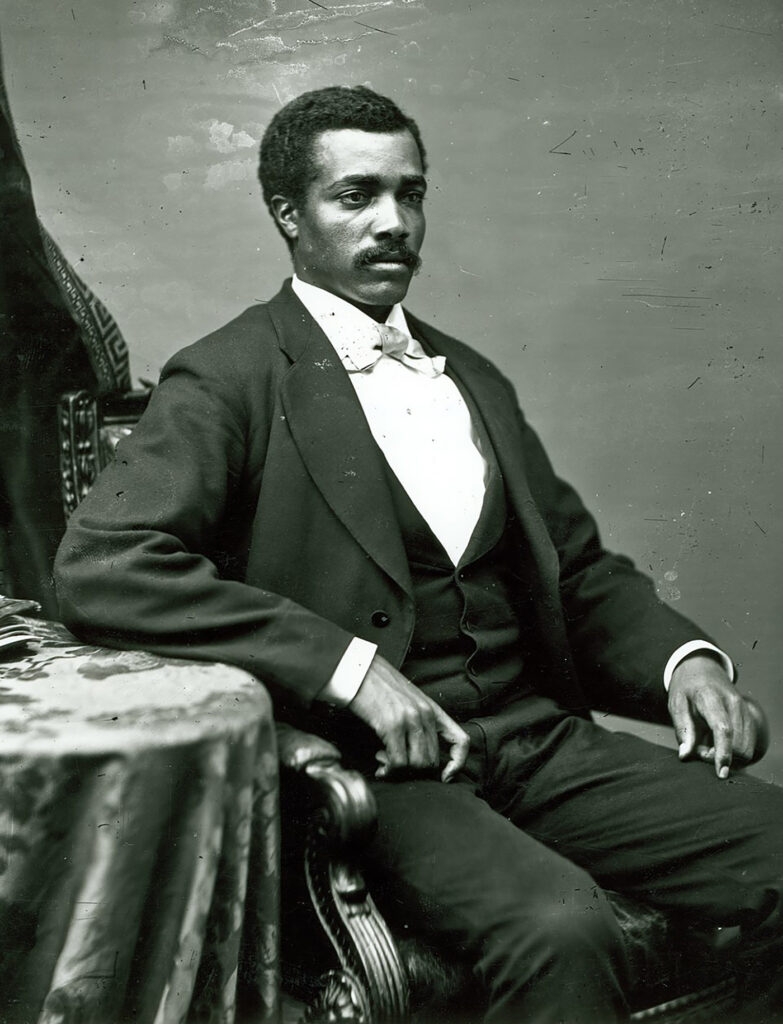






When US Congressman Josiah Walls left Washington, DC, in 1876, it would be another 117 years before Floridians sent another Black person to represent them in the halls of Congress.
One hundred and seventeen years.
The cause and consequences of that gap are worth revisiting as—after the US Supreme Court decision in Louisiana v. Callais on April 29, 2026, and the vote of the Florida Legislature on the same day to create a new congressional map in Florida to further diminish Black political power in the state—Black Floridians find themselves in a position similar to the one their ancestors occupied as they stood on the precipice of the Jim Crow Era in 1877.
The basic lesson is this: civil rights follow voting rights. Without access to the ballot and the ability to effectively elect people who represent their values and their community, historically Black people have been left to the whims of the majority society. In the US, that means white people. From the time Florida law allowed some of the state’s first Black elected officials in 1868, a period later reinforced by the 15th Amendment. Black voters and the men they elected created essential institutions, such as public schools and institutions serving the differently abled. Their political priorities were informed by their experiences of lack, oppression, and deprivation, and were inspired by their humanity and values.
It took very little time for white Southerners to translate their guerrilla warfare against Black advancement into actual policy violence. When the Republican Party, the party of Lincoln, which had supported Black people as they transitioned from enslavement to freedom, grew tired of the incessant fighting throughout the South, which marred every election, the “gentlemen’s agreement” of the Compromise of 1877 withdrew critical federal protection from Black voters in the South, leaving the Black populace to fend for themselves.
Thus, Jim Crow was born. Without the ability to vote or hold office, the white majority in the South pushed Black people to the margins of society, erecting barriers to their progress and equality in every way imaginable. Black people faced restrictions or were barred from public transportation, accommodations, and educational institutions. These laws were enforced by police brutality and lynching. As one Black Floridian wrote in 1887, “We are in the hands of the devil.”
It would take decades of tireless effort at the state and national level to confront these systemically racist structures. Slowly, with the elimination of the poll tax, the opening of the Democratic primaries, and, at long last, the Voting Rights Act of 1965, Black voters regained the ability to shape the powers that governed them. The creation of fair districts at the city, county, and state levels empowered Black Floridians to elect representatives who looked like them.
On April 29, 2026, all of this work, this progress, was dismantled. Without significant effort, it may be another 117 years before Black Floridians recover.
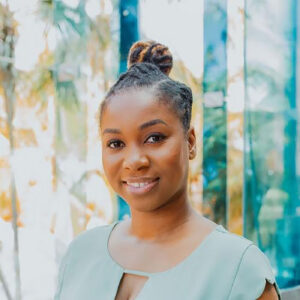
Tameka Bradley Hobbs, Ph.D., is a historian, author, and president of the South Florida Branch of the Association for the Study of African American Life and History.
