




There are elections when we vote primarily for candidates. And then there are elections when we vote for the direction of our communities.
Today is one of those elections.
Across South Florida, voters are participating in Florida’s Aug. 18 primary, choosing candidates for offices that will influence everything from Washington to Tallahassee to county government. The ballot includes races for governor, U.S. Senate, Congress, the Florida Legislature and important local offices.
For Black voters in Miami-Dade, Broward and Palm Beach counties, the stakes could hardly be clearer.
We cannot afford to sit this one out.
That urgency is magnified by troubling turnout. As Election Day began, voter participation in Miami-Dade and Broward remained low, with Broward turnout still below 10% following early voting. Low turnout does not make an election less consequential. It makes every ballot cast more powerful.
Primary elections rarely receive the attention of presidential elections. There are fewer television commercials, fewer national personalities and less excitement. But in communities dominated by one political party, the primary can effectively determine who will represent residents long before November.
That makes today consequential.
South Florida is experiencing a political transition unlike anything we have seen in years. Congressional boundaries have been redrawn. Long-established political relationships are being disrupted. Open seats have attracted crowded fields. And candidates are asking voters to decide not simply who they like, but what kind of leadership they want for the next generation.
Nowhere is that more evident than in congressional districts with large Black populations.
Florida’s 20th Congressional District has historically been a center of Black political representation, and this year’s contest has raised broader questions about whether Black representation in Florida’s congressional delegation could decline.
In Miami-Dade, the District 24 Democratic primary will help determine who succeeds U.S. Rep. Frederica Wilson, creating another generational decision for communities that have depended on strong representation in Washington.
But this election is bigger than race, personalities or political parties.
It is about power.
For generations, Black Americans fought, marched, organized, endured intimidation and, in some cases, died for the right to participate fully in American democracy. Voting should never be viewed simply as a ceremonial tribute to that history. It is one of the most practical instruments of power available to ordinary citizens.
When we vote, elected officials have to account for us.
When we consistently vote, campaigns have to speak to our concerns.
When we organize our votes, our communities become impossible to ignore.
And there is plenty that requires attention.
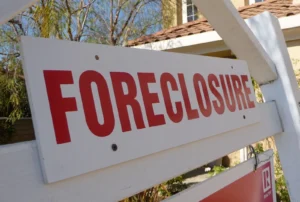
Housing costs are squeezing working families. Homeowners are struggling with insurance premiums. Renters are wondering whether they can continue living in the communities where they grew up. Small businesses need access to capital and contracts. Families are concerned about health care, education and the cost of groceries. Haitian families across South Florida remain deeply concerned about immigration policy and Temporary Protected Status.
These are not abstract political debates. They are kitchen-table issues.
The people elected today and in November will help decide how government responds to them.
That is why frustration cannot become an excuse for disengagement.
Some voters will say they do not trust politicians. Others believe government has failed them regardless of which party controls it. Those frustrations are legitimate. But withdrawing from the political process does not punish politicians.
It diminishes our own influence.
If you are dissatisfied, vote.
If you are angry, vote.
If you believe your community has been ignored, vote.
And if you believe South Florida deserves stronger leadership, today is your opportunity to help choose it.
Democracy does not guarantee that we will always get the candidates, policies or outcomes we want. It guarantees us something equally important: a voice in deciding.
Polls are open today from 7 a.m. to 7 p.m. Florida is a closed-primary state, meaning party affiliation determines which partisan contests appear on a voter’s ballot.
There will always be another political debate. Another campaign. Another election.
But there will never be another Aug. 18, 2026 primary.
Black South Florida has too much at stake — economically, politically and generationally — to surrender its voice through absence.
Today, our responsibility is simple.
Show up. Stand up. Vote.
Because if we want a voice in the decisions that shape our communities, we must first use the voice democracy has already given us: our vote.
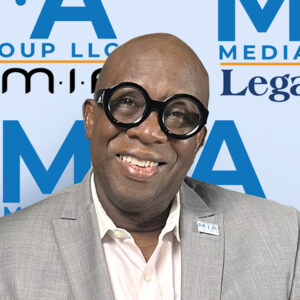
By Dexter A. Bridgeman
Publisher, M•I•A Media Group
______________________________________________________________________________________
The views and opinions expressed in this article are those of the author and do not necessarily reflect the official policy or position of M•I•A MEDIA GROUP LLC. Any content provided by our contributors is their opinion and is not intended to malign any religion, ethnic group, club, organization, company, individual, or entity.
