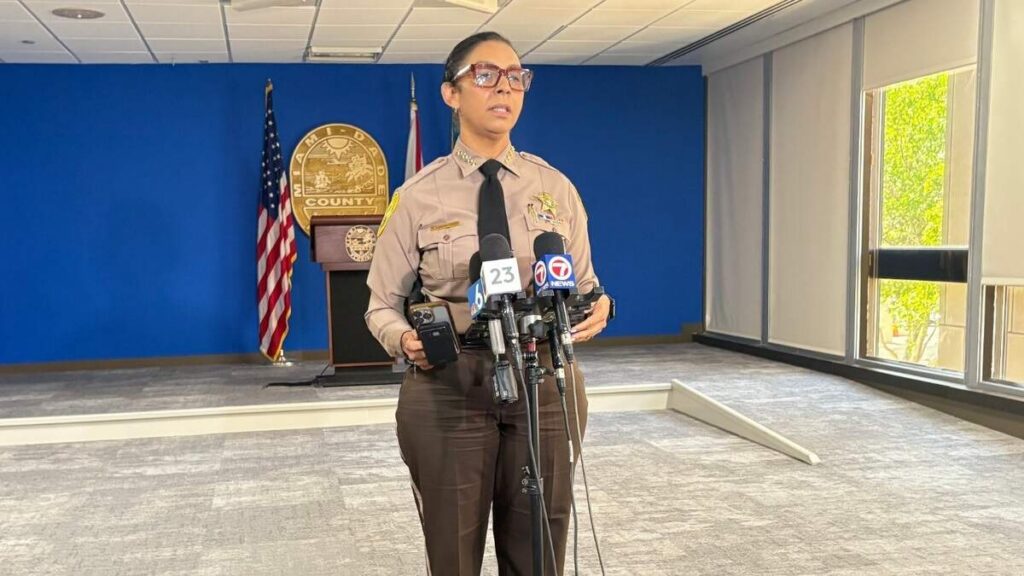






Sheriff Rosie Cordero-Stutz says the county’s record budget leaves essential jobs and training underfunded. Mayor Daniella Levine Cava says the money is there. The new commission chairman inherits the dispute as Florida prepares to expand property tax exemptions.
By Camille Bennett | M•I•A MEDIA GROUP
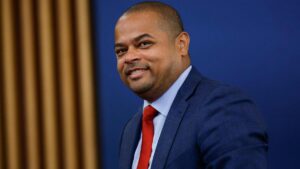
MIAMI — When Miami-Dade commissioners unanimously elected Keon Hardemon chairman on Nov. 17, they handed him the gavel in the middle of a dispute that has already reached from the county budget to the security of its elected officials. Sheriff Rosie Cordero-Stutz says she needs another $42 million to meet payroll obligations and keep hiring on track. Mayor Daniella Levine Cava says the county approved the largest law enforcement budget in its history and funded the new positions the sheriff requested. Both offices now have to contend with a property tax amendment that will change how much revenue the county can raise.
Hardemon’s involvement comes through his new authority over commission proceedings and committee assignments. His election puts him in a position to press both offices for a public accounting of what the county appropriated, what the sheriff can spend and which services could be affected if commissioners have to reopen the budget. Juan Carlos “JC” Bermudez was unanimously elected vice chairman.
How a record budget can still produce a shortfall claim
The county says its adopted fiscal year 2026–27 budget provides the Sheriff’s Office with $1.234 billion, about $186 million above the sheriff’s $1.048 billion certified request. The county says the appropriation funds all 200 additional positions requested, including 80 sworn and 120 civilian jobs. It also includes roughly $95 million for overtime and related benefits. County officials say general fund support for the agency has grown from roughly $720 million in fiscal year 2022–23 to about $990 million this year.
Cordero-Stutz disputes what those totals say about her ability to run the agency. Her office says labor agreements reached before she took office, along with pension and health insurance costs, account for $62.5 million of her requested increase. The sheriff also says filling 172 existing civilian vacancies over the course of the year would cost $7.2 million that the budget fails to provide. Those jobs include 911 call takers, dispatchers and staff who support investigations. Her office projects that the funding gap could force it to cancel academy classes and end the fiscal year with about 180 fewer deputies than planned.
The distinction between new positions and existing vacancies is central to the fight. The county points to 200 new jobs it says it funded. The sheriff points to vacancies she says she lacks the money to fill and academy classes she says she may have to cancel. A side-by-side accounting of those positions, their expected start dates and the payroll dollars available for them would show where the two budgets diverge.
The fight reaches the mayor’s security detail
In October, Cordero-Stutz announced she would discontinue the Sheriff’s Office program that provided security and transportation for the mayor and all 13 commissioners. She put the annual cost at about $4.1 million. Levine Cava warned that the short notice created a security challenge at the Stephen P. Clark Government Center. The sheriff later denied that the decision was retaliation, telling the mayor in a letter obtained by Miami Herald reporter Douglas Hanks that it reflected her office’s spending and operational priorities. Hanks also reported that the mayor planned to assign county correctional officers to protect and transport elected officials.
The change raises a question commissioners can examine even while the larger budget dispute continues. How much does Miami-Dade save overall if the Sheriff’s Office ends the program and the county pays another department to provide similar protection? The answer depends on how many officers are reassigned, what duties they take on and what it costs Corrections to cover the work they leave behind.
The Miami Herald Editorial Board questions the sheriff’s position
In an Oct. 30 editorial, the Miami Herald Editorial Board argued that Cordero-Stutz’s push for another $42 million was hard to reconcile with her support for Amendment 3, which reduces the property tax base local governments depend on. The board also challenged county leaders to justify the scope of their taxpayer-funded security details. It pointed to the sheriff’s $132,500 order for optional cowboy hats as poorly timed amid her warnings about staffing. The Sheriff’s Office told CBS News Miami the hats came from money already allocated for uniforms.
Florida voters approved Amendment 3 with 61.98% of the vote. It expands the homestead exemption for non-school property taxes beginning with the 2027 tax roll and lowers the annual cap on assessment increases for non-homestead property from 10% to 5%. The sheriff has pointed to a proposed $20 million contribution from the county tax collector for deputy payroll and overtime as one possible funding source. Her office said that money was subject to approvals and had yet to be allocated.
What Hardemon can do from the chair
The dispute reflects a change Miami-Dade is still working through. In January 2025, after a statewide constitutional amendment took effect locally, most of the former county police department came under an independently elected sheriff. The commission still approves county funding for the agency. Florida law gives the sheriff a route to challenge that decision before the governor and Cabinet, sitting as the Administration Commission, which can decide disputed budget items. Cordero-Stutz announced she would pursue an appeal. As of Nov. 18, a final state decision could not be verified.
Hardemon, who grew up in Liberty City and represents District 3, has made violence prevention a priority through his Peace & Prosperity Plan. As chairman, he can use the commission’s public proceedings to bring the sheriff’s staffing projections and the county’s spending figures into the same discussion. For residents who depend on both a prompt response to a 911 call and a late-night bus ride home, the most consequential question is what each budget choice would do to the services they use. That is the accounting Hardemon now has a chance to put before the public.