






By Adrian Coleman | M•I•A MEDIA GROUP
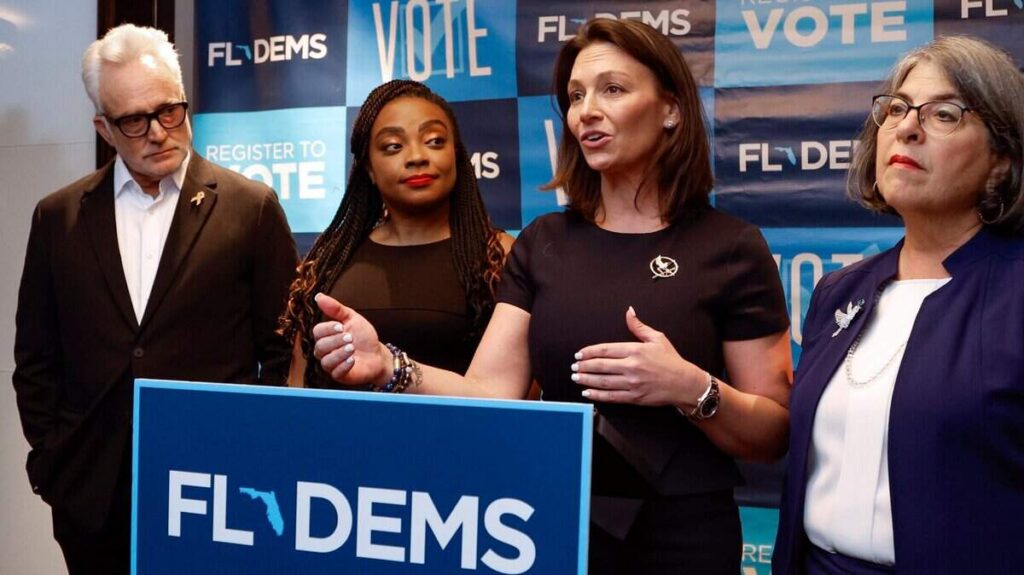
TALLAHASSEE, Fla. — For Florida Democrats, the midterm elections delivered something the party has struggled to claim in recent years: evidence that Republican dominance can be challenged.
Democratic victories nationwide provided encouragement. Gains inside Florida supplied something more tangible — additional lawmakers and an end to the Republican supermajority in the state House.
Republicans retained the governor’s office and control of both legislative chambers. But their reduced House majority changes the conditions under which they will govern, giving Democrats greater opportunities to influence negotiations and challenge the majority’s agenda.
The result is a stronger opposition heading into the 2027 legislative session, with a difficult assignment: demonstrate that winning more seats can produce benefits for Floridians.
What breaking the supermajority means, the Florida Democratic Party reported a net gain of 15 House seats and an additional Senate seat, while noting that a House race remained headed toward a recount. Those gains broke Republicans’ ability to independently reach the House’s 80-seat, two-thirds threshold.
That threshold matters. Overriding a governor’s veto requires a two-thirds vote in each chamber. A sufficiently large, united Democratic caucus can therefore prevent Republicans from overriding a veto without Democratic support.
Certain procedural decisions also require elevated voting thresholds. House Democratic Leader-designate Christine Hunschofsky identified the loss of Republicans’ ability to bypass some legislative rules independently as a practical consequence of the election.
These protections have limits. Republicans can still pass ordinary legislation with their majorities, control committee leadership and determine much of the legislative agenda.
For Democrats, the opportunity lies in making their votes consequential when higher thresholds apply and building coalitions when Republicans disagree.
Affordability becomes the test. Democrats’ strongest opening may be the cost of living. Housing, property insurance, wages and health care offer opportunities to connect legislative proposals to household concerns. Senate Democratic leader Tracie Davis identified lowering costs and raising wages as priorities following the election.
The challenge will be moving beyond criticism to proposals that can attract support across party lines. A larger minority can press for hearings, scrutinize spending and negotiate amendments. Enacting policy still requires persuading members of the majority.
For South Florida’s Black communities, that makes the details especially important: Which housing programs receive funding? How are public schools supported? Can small businesses access state opportunities? Does health care become more accessible?
Election gains create more opportunities to raise those questions. They do not predetermine the answers.
Washington’s wins do not transfer automatically. Democrats’ national victories may help Florida lawmakers attract donors, recruit candidates and argue that the state deserves sustained investment.
Those are potential political benefits, rather than powers granted by the election. Democratic control of Congress does not give Florida Democrats control over the state budget, reverse state laws or remove the Republican governor’s veto authority.
Florida’s results also caution against treating national momentum as a substitute for local organizing. Republicans continued to win statewide even as Democrats gained legislative seats.
The party must understand where its candidates improved, which voters supported them and whether those relationships can survive beyond one election cycle.
A foothold that must produce results, the immediate change in Tallahassee is a larger Democratic presence and a narrower Republican advantage. That can strengthen debate and create openings for negotiation.
It also raises expectations. Democrats will now face pressure to explain what they sought, where they secured concessions and why other proposals failed. Voters deserve that accounting alongside celebrations of the party’s recovery.
For Florida Democrats, the election opened a path toward greater relevance. Their next challenge is to make that relevance visible in the lives of the people who sent them to Tallahassee.