







 Since becoming president and CEO of the Urban League of Greater Miami, I have spent a lot of time thinking about what leadership really means in a community like ours. It means celebrating Miami, yes. But it also means being honest about where we are falling short—and having the courage to do something about it.
Black health is one of those places.
Black residents make up roughly 17 percent of Miami-Dade County. Yet in 2024, about 85 percent of Black, non-Hispanic residents had health insurance, compared with 93 percent of White, non-Hispanic residents. Eight percentage points can look small when you see it on paper. It doesn’t feel small when you are the person putting off a doctor’s appointment because money is tight.
Then there is maternal health. And this is where, as a Black woman and a mother, the statistics become deeply personal for me. I remember almost losing my life giving birth to my daughter Reign, and advocacy came in the form of a name drop, which equates to access.
In 2022, the maternal mortality rate for Black women in Miami-Dade was 57 deaths per 100,000 births. For White women, it was 12.7. Black infants also experienced a mortality rate of 12.5 deaths per 1,000 live births, compared with 4.3 for White infants.
I don’t believe we should have to explain away numbers like these. We should be asking why they exist—and what we are willing to change.
The same is true for chronic disease. In 2024, the diabetes death rate for Black men in Miami-Dade was 49.0 per 100,000, compared with 20.9 for White men. For Black women, it was 36.0 compared with 12.3 for White women.
Behind every one of those numbers is somebody’s father, mother, sister, brother, neighbor or friend.
That’s why I don’t see healthcare as something that begins and ends in a doctor’s office. Health is shaped by whether you can afford your rent. Whether you have reliable transportation. Whether there is healthy food nearby. Whether you feel heard when you walk into a hospital. Whether your child can get mental health support before they reach a breaking point.
We need to move beyond conversations about disparities and start measuring our commitment by what actually changes.
Healthcare providers have a responsibility to deliver culturally competent care. Policymakers have a responsibility to make health equity a priority. Businesses and philanthropy have a responsibility to invest in healthy communities. And all of us have a responsibility to speak up when the system is not working for our people.
That is part of what the Urban League has always done: stand in the gap, tell the truth and work toward solutions.
I want a Miami where Black mothers can give birth without fear. Where our children can get care before a crisis. Where our seniors don’t have to choose between medicine and groceries. Where the circumstances of your ZIP code don’t quietly determine how long you get to live.
We can build that Miami. But it will require more than good intentions. It will require investment, accountability and the willingness to keep showing up after the headlines fade.
Our community has fought too hard merely to survive. Now we have to fight—and lead—for the opportunity to thrive.
That is the work in front of us. And I am ready to do my part. Are you?
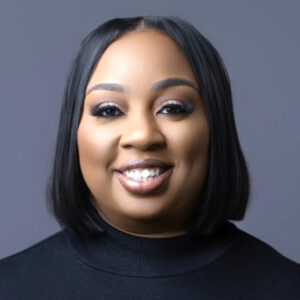
Makeda R. Johnson, Ed.D., is president and CEO of the Urban League of Greater Miami, Inc., advancing economic opportunity, equity and civil rights throughout Miami-Dade County
