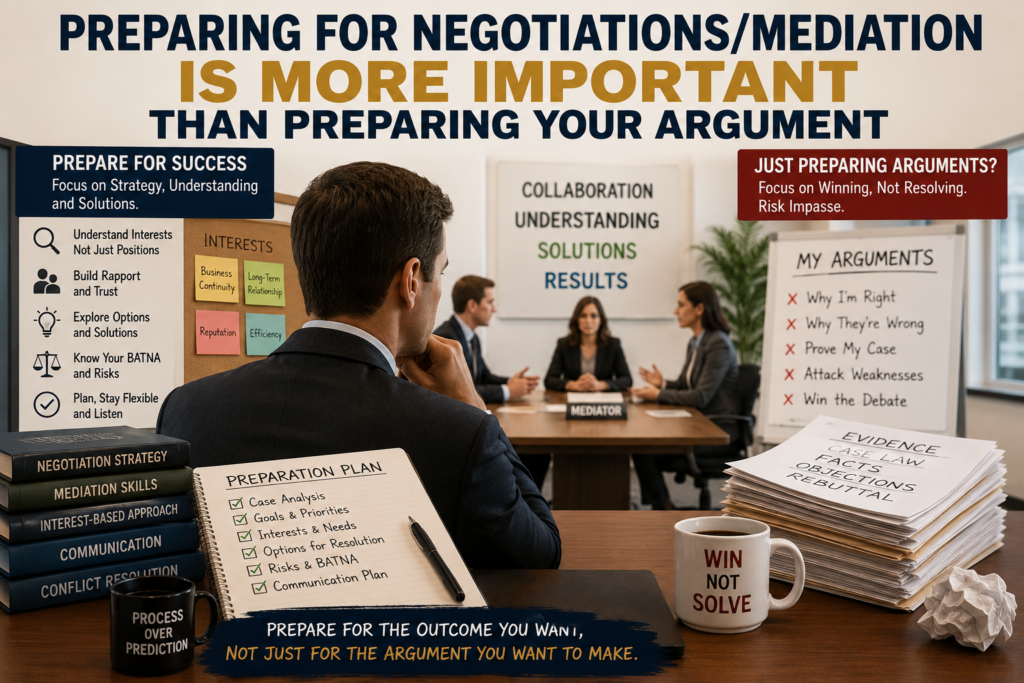








 Attorneys devote countless hours preparing legal arguments, organizing exhibits, and anticipating opposing counsel’s strategy. Yet one of the greatest predictors of a productive negotiation/mediation often has little to do with legal preparation. It is how well the client has been prepared for the mediation process itself.
A well-prepared client is not simply informed about the facts of the case—they understand the purpose of mediation, recognize the realities of litigation, and are emotionally equipped to make thoughtful decisions. Even the strongest legal position can be undermined by unrealistic expectations, unmanaged emotions, or a client who arrives believing mediation is merely another opportunity to “win.”
Managing Feelings
The first step is expectation management. Clients should understand that mediation is not a trial, and the mediator is not a judge waiting to declare a winner. Mediation is a confidential, voluntary negotiation process designed to explore resolution through informed decision-making. Productive negotiations often require patience, flexibility, and a willingness to evaluate options that may not have existed before the mediation began. Whether it’s a family/divorce or business commercial matter this is difficult to receive as it requires the parties to suspend personal feelings.
Equally important is emotional preparation. Conflict is personal, particularly for parties who have invested significant time, money, or emotion into their dispute. Anger, frustration, fear, and the desire for vindication frequently influence negotiation more than legal analysis. Attorneys who acknowledge these emotions before mediation help clients recognize when emotions are driving decisions rather than objective judgment. Emotional readiness allows clients to listen more effectively, evaluate proposals with greater clarity, and avoid reacting impulsively to difficult conversations.
Necessity of Authority
Another critical consideration is settlement authority. Too many mediations stall because the individual attending lacks the authority or practical ability to make meaningful decisions. Before mediation begins, attorneys should confirm who must approve a settlement, identify any organizational or insurance constraints, and ensure the necessary decision-makers are available throughout the process. Preparation in this area prevents unnecessary delays and demonstrates respect for everyone’s time and resources.
Accessing Risk
Risk analysis should also be an ongoing conversation rather than a last-minute discussion in the mediator’s conference room. Effective attorneys help clients realistically assess litigation costs, evidentiary challenges, appellate risks, collection issues, and the uncertainty inherent in every trial. The objective is not to diminish confidence but to replace assumptions with informed judgment.
Prepare to Solve vs Winning
Ultimately, mediation succeeds when clients make decisions they understand and own. The attorney’s role extends beyond advocating legal positions; it includes preparing clients to evaluate risks, weigh opportunities, and exercise sound judgment under pressure. When clients arrive informed, emotionally prepared, and empowered to make decisions, they are far more likely to engage meaningfully in the process.
The strongest advocacy in negotiation/mediation is often demonstrated long before the opening session begins. Ensure advocates and clients are prepared to be flexible and to compromise, not just your argument. This has proven to be a valuable investment in achieving an effective and durable resolution.
Stanley Zamor is a Florida Supreme Court certified circuit/family/county mediator and primary trainer and qualified arbitrator. Zamor serves on several federal and state mediation/arbitration rosters and mediates with Salmon and Dulberg. As an ADR consultant/professional he regularly lectures on a variety of topics from ethics to family/business relationships. ZamorADRExpert@gmail.com ; www.effectivemediationconsultants.com; www.LinkedIn.com/in/stanleyzamoradr. (954) 261-8600
