








 In public education, leadership matters. But not all leadership is created equal.
At a time when school districts across the nation are facing unprecedented challenges—academic recovery, teacher retention, school safety, student engagement, and increasing political polarization—the role of the superintendent has never been more critical. This is not simply a managerial position. It is a role that demands deep knowledge of teaching, learning, leadership, governance, and the complex realities of public education.
That is why qualifications, experience, and credentials matter.
In today’s anti-DEI political environment, there is often a troubling effort to diminish or dismiss expertise, preparation, and professional accomplishment. But in education—where decisions directly impact children, families, teachers, and communities—we cannot afford to normalize the politics of incompetence or ill-preparedness.
Educational leadership is not something that should be learned on the fly.
Early in my career, I understood that preparation creates opportunity. That belief pushed me to earn both a master’s degree and a doctoral degree decades ago, while continuing to work in schools and classrooms. I believed then—as I do now—that doors open wider through planning, discipline, preparation, and experience.
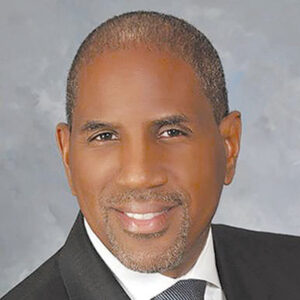
I have lived the continuum of public education leadership—from classroom teacher, to principal, to superintendent, and now as a member of the School Board of Miami-Dade County Public Schools, one of the largest and most complex school systems in America.
Each role taught lessons that no textbook or political talking point could replace.
As a classroom teacher, I learned firsthand the realities of instruction—what it means to reach struggling students, manage a classroom, and support children with different academic and social-emotional needs. I learned that behind every policy decision is a teacher trying to make learning meaningful for 25 or 30 students every day.
As a principal for 10 years—including serving as the youngest principal at both Holmes Elementary School and Miami Northwestern Senior High School—I learned that leadership is accountability in real time. Principals are responsible for student achievement, teacher development, school culture, safety, operations, and community trust. It is where vision meets execution.
Those experiences prepared me to later serve as superintendent, where leadership required balancing policy with practice, urgency with strategy, and innovation with stability across an entire district.
Most importantly, those experiences taught me that credibility matters.
Educators are far more likely to trust leadership from someone who has lived their experience. A superintendent who has taught in classrooms and led schools brings practical understanding that cannot be manufactured through politics, branding, or ambition alone.
This is not about excluding talented individuals from different backgrounds. Diverse perspectives strengthen organizations. But when selecting the leader of a major public school district, qualifications and proven educational experience must remain central considerations—not inconveniences to be brushed aside in favor of politics or expediency.
For a system as large and diverse as Miami-Dade County Public Schools, the stakes are simply too high.
The next superintendent should understand instruction, school operations, educational leadership, governance, and the realities facing students, teachers, and principals—not theoretically, but through lived professional experience.
Our children deserve leadership grounded in competence, preparation, and vision.
Because in education, effective leadership is not abstract.
It is earned.
And it begins in the classroom.
