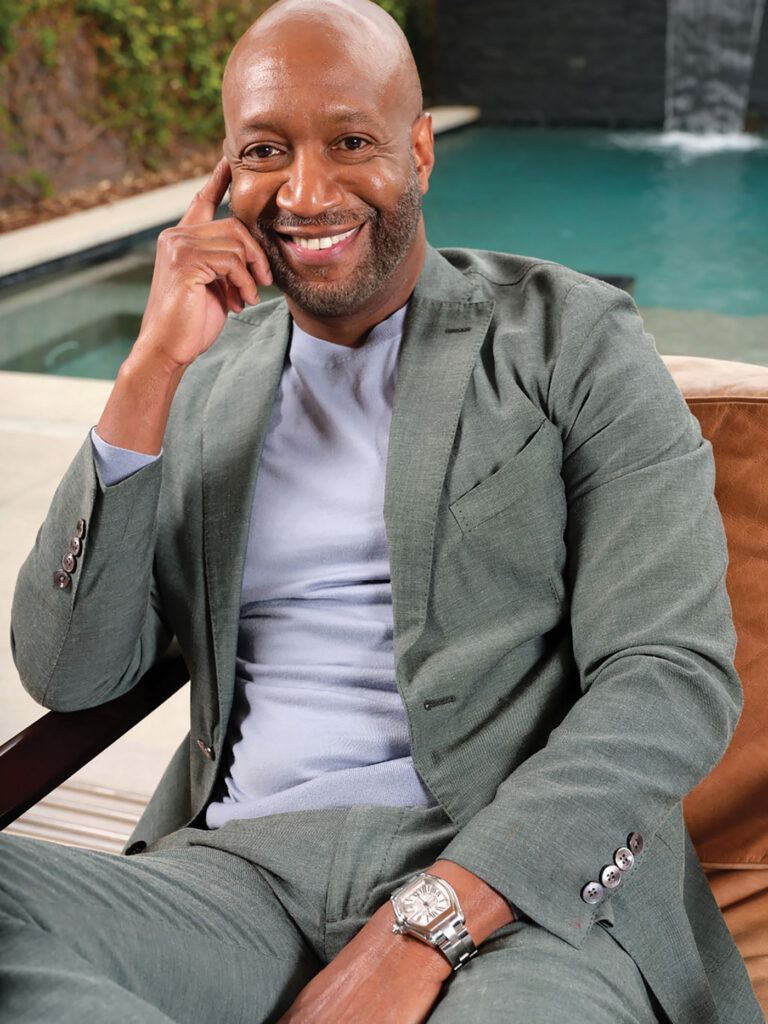



Jeff Friday’s return to Miami Beach this May carries the weight of three decades. The American Black Film Festival (ABFF), which he founded in 1997 and still leads, celebrates its 30th anniversary May 27–31. What began with just 90 attendees has since evolved into a major gathering that now draws thousands each year, becoming one of the entertainment industry’s premier spaces for Black film and storytelling.
“I just left there wondering, is there a community of Black people who are making and want to make movies?” Friday recalled of seeing “Love Jones” at the Sundance Film Festival — a moment that exposed how invisible Black stories and creators remained on larger industry stages. “The only way you find out the answer to a question like that is to provide a platform.”
The mission at the start was simple. “We started this thing just to get Black people together,” Friday said.
That vision steadily expanded beyond a single festival. Today, ABFF operates as a cultural institution that nurtures emerging filmmakers, connects industry professionals, and creates space for Black stories to reach wider audiences. Its influence now extends through ventures such as ABFF Honors, the ABFF Comedy Festival, and the ABFF London Film Festival. This year’s 30th anniversary theme, “Homecoming,” reflects how deeply the festival has embedded itself within the creative community.
Sustaining that growth required endurance. “Never, ever, ever give up,” Friday said. “We’ve come through the worst of times, and we are survivors.”
The message resonates in an industry where conversations surrounding diversity often shift with economics and changing corporate priorities. ABFF remained consistent through those fluctuations, continuing to develop opportunities for Black storytellers and filmmakers.
Its influence can be measured in the careers connected to the festival. “When you think about people like Ryan Coogler, Issa Rae, and Will Packer, you’re reminded that ABFF was never just about hosting screenings,” Friday said. “It was about creating a place where Black talent could be seen early, taken seriously, and given room to grow.”
For Friday, continuity carries equal importance. “Regina King was there from the inception, and that means something to me,” he said. “When people who understand the culture and the mission stay connected over time, it tells you ABFF has become more than an event. It has become a home.”
Miami Beach remains central to the festival’s identity. “This city gives ABFF a backdrop that feels aspirational, but also welcoming,” Friday said. “People from all over can come here, gather in one place, and celebrate Black storytelling in a way that feels open, vibrant, and far-reaching.”
Then comes the line that captures the spirit of the festival itself: “You don’t have to be Black to attend ABFF. You just have to value great stories, respect the culture, and be willing to experience the world through a different lens.”
Thirty years later, the platform still stands. So does its builder.
