



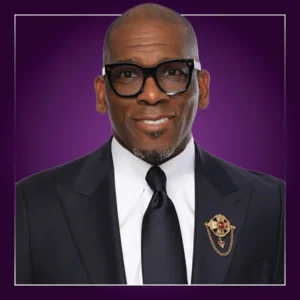
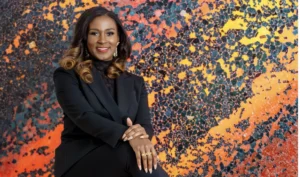




 Art and culture are the intersection of spirituality, says Ludlow E. Bailey, managing director of Miami-based Contemporary African Diaspora Art (CADA). Bailey will present his latest exhibit, “Divine Swagger, Portraits of Power, Rhythm and Remembrance,” as part of the Art of Black, Dec. 6 and 7 at Miami’s Art Deco Museum. The exhibit includes works by artists from Haiti, Nigeria and the U.S.
“My curatorial practice is based on packing the metaphysical and spiritual by featuring the works of painters and sculptors who focus on doing portraits that represent the uniqueness of Black people through expressions, swag, rhythm, attitude, cultural retentions and clothing. Because in those things I find a lot of spiritual power,” says Bailey, who is considered one of the leading experts on Black contemporary diaspora Art.
Bailey, who has traveled extensively throughout the African diaspora, says the aesthetic power of Black art is not accidental or incidental, but born out of the struggle.
 “It is forged in the fire of trauma and shaped by the hands of transcendence,” he says. “Black people across the globe have endured unspeakable violence, colonialism, racial terror, apartheid, mass incarceration and systemic erasure. And yet, out of these ashes we have emerged with an aesthetic that is not only beautiful, but sacred.”
Sharing that beauty and its power to empower is Bailey’s mission. “Art and culture are a very spiritual space for me and play a very vital role in getting us through the post-traumatic slavery syndrome we have suffered for the past 500 years,” he says.
 Bailey says the exhibition is titled “Divine Swagger,” not simply for its style, but for its substance. “Swagger is not vanity, it is armor,” says Bailey. “It is the choreography of those who have been told to shrink, yet dare to expand. It is the signature of a people who survive not just to endure, but to thrive and to do so with brilliance.”
Bailey says that, given the current attacks on diversity, equity and inclusion, as well as Black history, he sees art and culture as a means to cultivate humanity.
“Black people have a unique experience in the multiverse,” he says. “When I’m talking to white audiences in America, I am trying to get them to understand the unique power of Black people,” says Bailey, who was born in Jamaica and raised between New York and London. “We are the origin of humanity. All life started in Africa.”
Bailey, who speaks multiple languages and considers himself a citizen of the world, says in spite of racism and colonialism, the power of Black art is undeniable, making it the fastest-growing segment of the global contemporary art market. He asserts that Miami is rapidly becoming the epicenter for
African art.
“Black art is no longer being discovered, it’s being remembered,” says Bailey. “Culture is capital,” he continues. “And, in this moment, Black culture is the currency of tomorrow.”
