





What does it mean when a candidate for governor in Florida openly calls for the lynching of a Black man? It is an unfortunate sign of the continuing devolution of politics in Florida and the nation, one with increasingly dangerous consequences.
The incident I reference happened on April 2, when a Black man confronted gubernatorial candidate James Fishback with allegations that he’d had inappropriate sexual contact with a 17-year-old girl. During the exchange, as the social media influencer, who goes by the name Tajy, pressed his case and asked that Fishback refrain from “smashing” teenage girls in the future, Fishback shouted twice that the Black man should be lynched
This is not the first time Fishback has called for the lynching of a Black man. On Jan. 30, 2026, on X, Fishback wrote that journalist Don Lemon was lucky “he’s not getting hanged in the public square” for being present for an anti-ICE demonstration in Cities Church in St. Paul, Minnesota.
Fishback has made a name for himself because of the continued use of anti-Black and anti-Semitic statements that have become a staple of his campaign. The candidate routinely uses racist references when discussing his opponent, Byron Donalds, calling him “AIPAC Shakur” and saying that Donalds was a “slave” to the Jewish lobby. The result? According to polls, Fishback leads the race among Gen Z voters. This is no surprise, given the recent revelations regarding the secret and violently racist group chats of the campus GOP groups at both the University of Florida and the University of Miami.
Unfortunately, Fishback’s utterances about lynching reflect the tragic re-entrenchment of anti-Black racism and the embrace of racial violence in Florida. Over a century ago, Florida Governor Sidney J. Catts rebuffed the demands of the NAACP to investigate the lynching of Bud Johnson, a veteran of World War I, who was kidnapped, tortured, and burned to death on March 12, 1919. Catts was not only callous and dismissive of the calls for justice, but reinforced lynching as an appropriate response to allegations of Black criminality, stating that “If any man, white or black, should dishonor one of my family he would meet my pistol square from the shoulder, and every white man in this south, who is a red-blooded American, feels the same as I do.” Notably, Catts had allegedly shot and killed a Black man in Alabama before being elected governor of Florida.
Fishback’s call for the lynching of a Black man in this case is an interesting role reversal. While during Catts’ time, white men justified lynching as a justifiable reaction to Black men raping white women, Fishback, who is a white-presenting man whose mother is Colombian, called for Tajy’s lynching as a response to Tajy’s accurately pointing out that he was in a relationship with a teenage girl when he was 27. Fishback was taken to court on charges of cyberstalking as he pressured the teen to keep their sexual relationship a secret. Fishback’s alleged behavior is another log on the roaring fire of inappropriate sexual liaisons by high-ranking Republicans, from Matthew Gaetz to Donald Trump himself.
While the general poor character of Republican candidates isn’t something new, the acceptable increase of vehemently racist language, both in private and now in public, is cause for great concern. The growing support of global White supremacy, Nazisim, and race-based mass deportation is a global threat, as vividly illustrated in “Chain of Ideas: The Origins of Our Authoritarian Age”, the latest work by Ibram X. Kendi.
The world seems ready to cast aside the lessons of the Holocaust in Europe and the era of lynching violence in the US. It is important that we remember and recognize the readily identifiable signs of the rise of racist authoritarianism in our midst and organize to counter it.
References to lynching, casually and frequently, by someone who aspires to be governor of Florida is a glaring cause for concern, especially because our politics are increasingly directed by the shifting winds of white racial anxieties that are rising across the globe. Men like Fishback represent the coming storm.
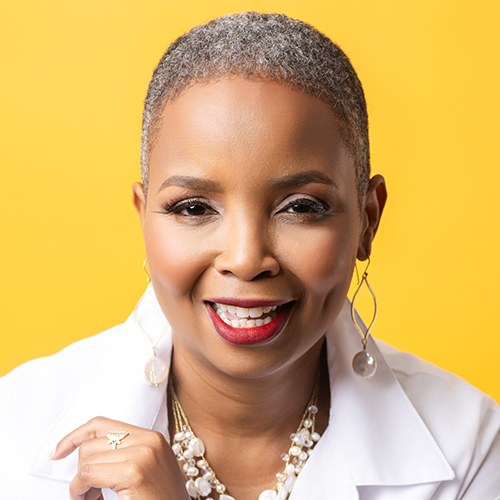
Tameka Bradley Hobbs, Ph.D., is the author of the award-winning book Democracy Abroad, Lynching at Home: Racial Violence in Florida, and serves as the president of the South Florida Branch of the Association for the Study of African American Life and History.
_____________________________________________________
The views and opinions expressed in this article are those of the author and do not necessarily reflect the official policy or position of M•I•A MEDIA GROUP LLC. Any content provided by our contributors is their opinion and is not intended to malign any religion, ethnic group, club, organization, company, individual, or entity.
