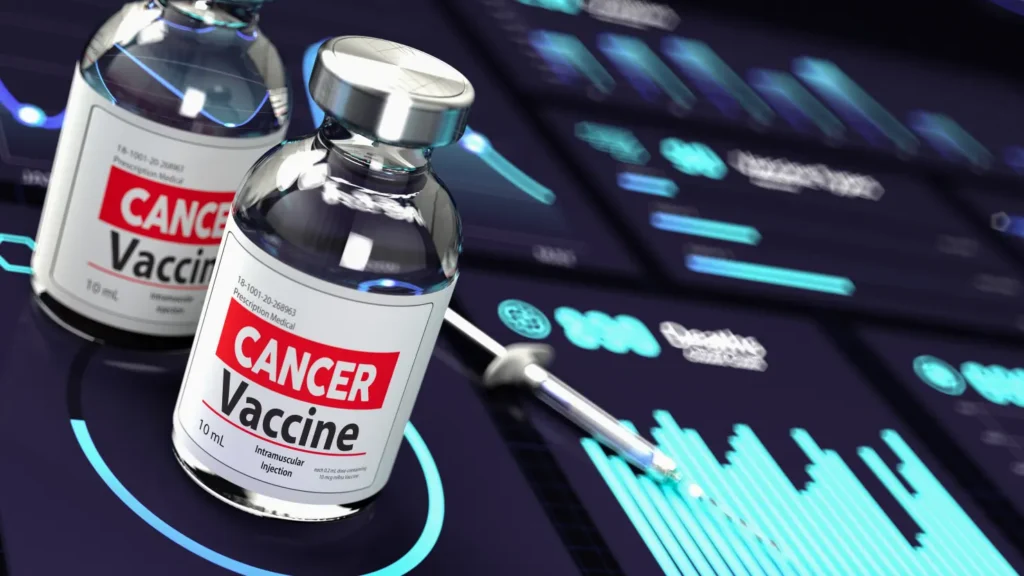






Merck and Moderna’s experimental shot could become the first U.S.-approved personalized mRNA cancer vaccine. A late-stage trial showed a benefit when it was added to standard treatment after surgery.
By Leah Monroe | M•I•A MEDIA GROUP
For people with high-risk melanoma, surgery can remove all visible cancer and still leave a question that takes years to answer: Will it come back? An experimental vaccine from Merck and Moderna improved the odds in a large clinical trial. About two years after treatment began, an estimated 82% of patients who received the vaccine with the immunotherapy drug Keytruda were alive without a recurrence, compared with 70% of those who received Keytruda alone. The vaccine, called intismeran autogene, remains investigational.
A vaccine made for one patient at a time
Intismeran is designed using a sample of a patient’s tumor. Cancer cells can carry mutations that produce proteins that differ from those in healthy cells. The vaccine uses messenger RNA, or mRNA, to help the immune system recognize some of those distinguishing features. The aim after surgery is to help immune cells find and attack melanoma cells that may remain in the body. Keytruda, also known as pembrolizumab, blocks a signal that can restrain those immune cells. The two treatments are intended to work together.
The potential first is specific to the technology. The United States already has a cancer treatment vaccine called sipuleucel-T, sold as Provenge, for certain patients with advanced prostate cancer. Preventive vaccines serve another purpose. The HPV vaccine, for example, protects against infections that can cause several cancers. Intismeran is being developed for people who have already had melanoma, with each dose tailored to features of that person’s tumor. If approved, it could be the first U.S. cancer treatment vaccine to use personalized mRNA.
What the trial showed
The Phase 3 trial enrolled about 1,100 people with stage IIB through stage IV melanoma whose tumors had been completely removed. Researchers reported a 42% relative reduction in the rate of recurrence or death over the follow-up period. The estimated two-year rates, 82% versus 70%, put that result in everyday terms. For every 100 patients in each group, about 12 more were alive without a recurrence at that point in the group that received the vaccine.
Researchers also examined whether melanoma spread to distant parts of the body. At two years, an estimated 89% of patients receiving the combination were alive without distant spread, compared with 80% receiving Keytruda alone. Longer follow-up will help determine how long the benefit lasts and whether people who receive the combination live longer overall. The trial’s strongest evidence so far concerns what happens in the years after surgery, when a recurrence can mean another round of treatment.
Fever, injection site pain and fatigue were common among patients who received the vaccine combination. Moderna reported severe or worse treatment-related side effects in 14.2% of patients receiving both treatments and 13.4% receiving Keytruda alone. Those figures matter when discussing treatment after surgery. A patient recovering from an operation has to weigh the likely benefit of adding another therapy against its side effects and the demands of coming in for treatment.
What has to happen before patients can get it
Merck and Moderna have said they plan to work with regulators on applications for the combination. The trial results support a potential application, and U.S. availability depends on a decision by the Food and Drug Administration. If the FDA approves the vaccine, hospitals would need a reliable process to get tumor samples to a lab and deliver each patient’s finished vaccine. How long that takes and what insurers cover would help determine how widely patients can get it.
Researchers are also testing intismeran in other cancers, including non-small cell lung cancer. Each study has to establish whether the approach helps patients with that disease and at that stage of treatment. Melanoma is where the evidence is strongest today. For people facing the uncertainty that follows surgery for high-risk melanoma, the most consequential finding is already measurable. More of the patients who received a vaccine made for their own tumor reached two years alive and free of recurrence.