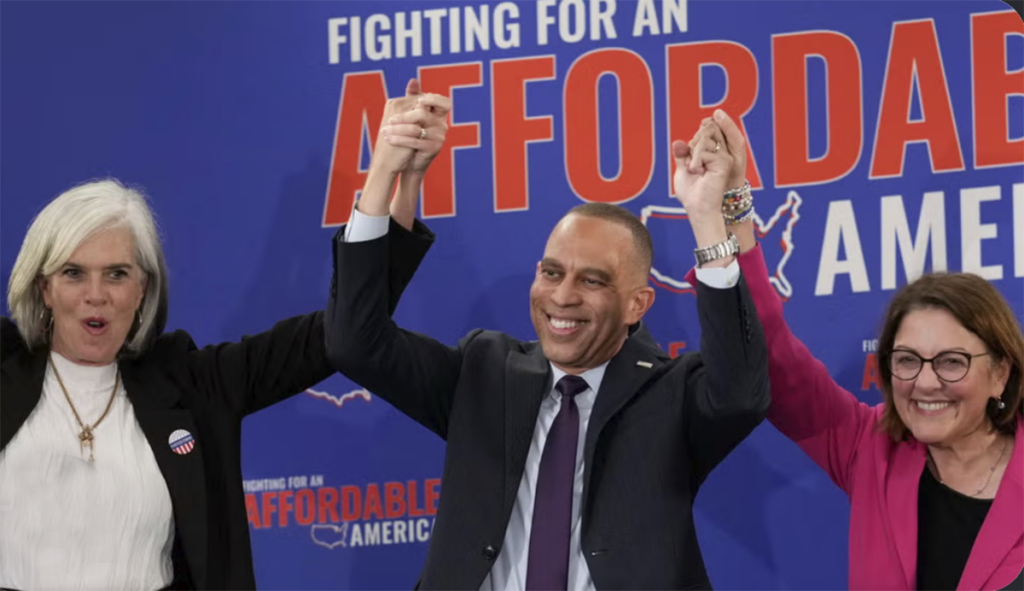







The incoming majority can press for lower health insurance premiums, tariff relief and more housing. Each would reach household budgets on a different timetable.
By Cameron Ellis | M•I•A MEDIA GROUP
A South Florida family can feel the cost of living rise three times in the same week: at the grocery checkout, when the rent comes due and when a health insurance renewal arrives. Democrats won control of Congress promising relief from those pressures. In October, grocery prices rose 0.4% from September and shelter costs rose 0.3%, according to federal data. The new majority’s challenge is turning votes in Washington into savings families can see.
House Democratic leader Hakeem Jeffries has outlined priorities for the first 100 days, including restoring enhanced Affordable Care Act tax credits, reversing Medicaid cuts and rolling back President Donald Trump’s tariffs. Democrats will have the power to schedule hearings, write bills and bring them to a vote when the new Congress convenes in January. Trump will still have veto power, and Senate Democrats, with 56 seats, will often need Republican votes to advance legislation.
Health insurance offers the clearest route to direct savings. Enhanced federal tax credits expired at the end of 2025, raising what many people pay for marketplace coverage. Restoring them could reduce eligible households’ monthly premiums once the change takes effect. In South Florida, that could help self-employed workers and small-business owners who buy their own insurance. Reversing Medicaid cuts would serve a different purpose by protecting coverage for people who qualify for that program.
Tariff relief could ease pressure on some prices. Import duties raise costs for companies that bring goods into the United States and for domestic manufacturers that use imported parts. A study by Federal Reserve Bank of New York researchers found that some of the 2025 tariff increases reached consumers through higher prices. Removing duties could give businesses room to lower prices. How much shoppers save would depend on which tariffs are lifted and how much of the savings businesses pass along.
That difference matters at the grocery store. A tariff change can help when an imported product or ingredient has become more expensive because of a duty. The price of a weekly grocery basket also reflects labor, transportation, weather and competition. Lawmakers can hold hearings to examine how suppliers and retailers set prices and press regulators to investigate anticompetitive conduct where evidence warrants it. Those steps can clarify why prices are high. Savings at checkout would vary by product and retailer.
Housing may offer the best opening for bipartisan action. Congress already passed the 21st Century ROAD to Housing Act with broad support from both parties. It includes incentives for permitting reform and higher federal loan limits for multifamily projects. The incoming Congress can fund authorized programs and track whether communities use them. In Miami-Dade and Broward, the impact would depend on where projects get approved, how quickly they are built and whether the homes are affordable to people who live and work nearby.
The timing matters for renters. Financing a development, securing approvals and completing construction can take years. Rental assistance, if funded and available, can help eligible families sooner by reducing the share of income they spend on housing. South Florida households weighing a lease renewal have more reason to watch when assistance becomes available than how many units a federal program might eventually support.
The hardest part is getting legislation through divided government. Ending a Senate filibuster on most bills typically takes 60 votes. Overriding a presidential veto takes two-thirds in both chambers. Those thresholds make negotiations with Republicans and the White House central to the affordability agenda. Democrats can put specific proposals up for votes and make lawmakers’ positions public. Measures with bipartisan backing have a stronger chance of reaching households.
The first places to look for relief are bills where federal policy can directly change what a family pays. A restored insurance credit could show up as a smaller premium. Tariff reductions would have a less predictable effect on the next grocery receipt. Housing investment would take longer to show up in rents. By the end of the first 100 days, voters will be able to judge which proposals Congress advanced. The more consequential test will come when families see whether their monthly expenses actually changed.