


Miami-Dade has already struck a $3.9 million advertising package. The larger opportunity is turning interest in Vice City into visits, local spending and creative work.
By Jordan Hayes | M•I•A MEDIA GROUP
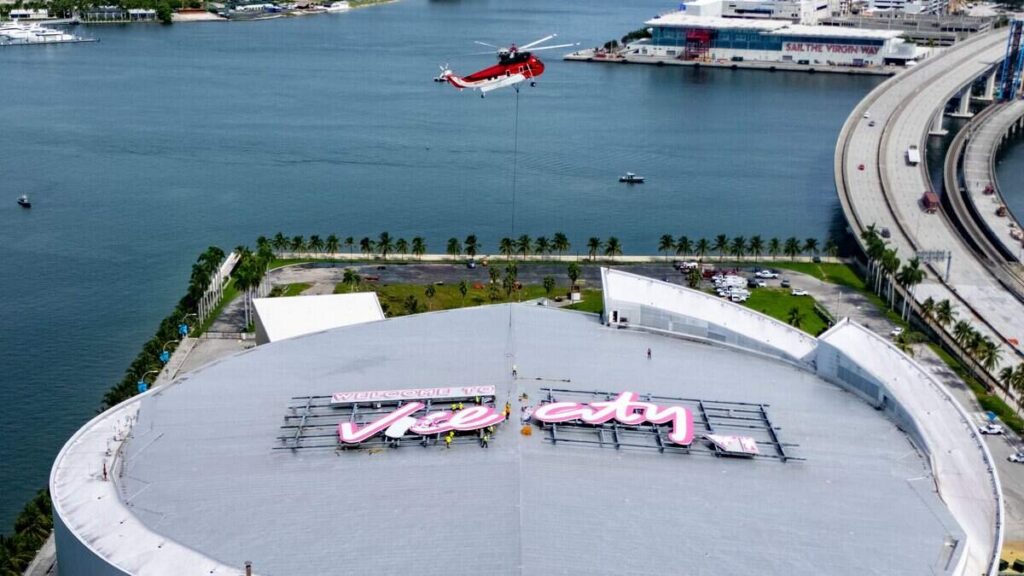
MIAMI — The words “Welcome to Vice City” are already on the roof of the Kaseya Center. On Thursday, Nov. 19, millions of players around the world will be able to explore the fictional Miami that inspired the sign. Ahead of the release of Grand Theft Auto VI, market research firm Sensor Tower estimated 15.88 million digital preorders across PlayStation and Xbox, worth about $1.54 billion worldwide. That figure measures demand for the game. Miami-Dade’s opportunity is to turn some of that demand into spending in the place that inspired it.
Miami-Dade has already put a price on the attention
Mayor Daniella Levine Cava announced an advertising package valued at $3.9 million, combining an agreement with Rockstar Games and separate ad purchases through companies that manage space at Miami International Airport and across the county’s transportation system. The total includes an earlier $975,000 arrangement tied to the Kaseya Center display. The county allocated those funds to development of a public park at Dan Paul Plaza behind the arena. Rockstar is covering installation, maintenance and removal costs for advertising under its county agreement. Planned promotions include lighting at the airport and PortMiami.
The park allocation gives residents a concrete way to follow the money after the signs come down. The broader package is also a test of how Miami-Dade uses prominent public spaces. County Commissioner Juan Carlos Bermudez and Sheriff Rosie Cordero-Stutz opposed using county resources to promote the game. Bermudez told WLRN that Miami had spent decades moving beyond its reputation for drugs and crime, and he argued the promotion worked against that effort. The debate puts a dollar figure alongside a harder question about which image of Miami the county wants to sell.
Where visitor spending could land
The first opportunities are visible on South Beach. The Clevelander on Ocean Drive has a launch-night party listed by the Greater Miami Convention & Visitors Bureau. The area’s Art Deco hotels and neon streetscape give fans a recognizable starting point. A trip built around the game could fill a hotel room or sell a walking-tour ticket. An itinerary that takes visitors into Little Havana, Historic Overtown or Little Haiti could also bring customers to independent restaurants, galleries and music venues and introduce them to communities whose stories extend well beyond the game.
The geography offers room for a wider South Florida benefit. Rockstar’s fictional state of Leonida includes an island chain inspired by the Florida Keys and wetlands reminiscent of the Everglades. A visitor who starts on Ocean Drive could extend the trip into Monroe County or book a guided wetlands excursion. The scale of any travel bump remains uncertain. Greater Miami and Miami Beach counted 28.3 million visitors in 2025, so a busy launch weekend alone would reveal little about how many people came specifically because of the game. Hotel bookings linked to events, ticket sales and visitor surveys would offer a clearer picture.
The opportunity after launch week
The gaming industry’s presence is already visible downtown. The Esports Awards took place Tuesday at the Adrienne Arsht Center, part of three days of events that brought competitive gaming professionals to Miami during launch week. Those gatherings can generate work for local production crews, event vendors and venues. The longer-term opportunity is repeat business. A company that returns to Miami for its next tournament or hires a South Florida studio for animation, audio or livestream production creates work that can outlast the release calendar.
Who gets that work matters as much as where the biggest events are held. A downtown venue can host the main attraction while neighborhood businesses see little extra traffic. Local benefits become easier to track when organizers hire area vendors, book local performers and give visitors a reason to spend time beyond the event site. For Black-owned businesses in Overtown and elsewhere in South Florida, the clearest sign of a payoff would be paid bookings, new customers and partnerships that carry into the next event.
The preorder estimate tells Rockstar how many people are ready to explore Vice City. Miami-Dade has a different set of numbers to watch in the months ahead: how many visitors book a night, how much they spend with local businesses and how many gaming companies come back. The progress of the park behind the arena will be one result residents can see for themselves.