







By Camille Mercer | M•I•A MEDIA GROUP
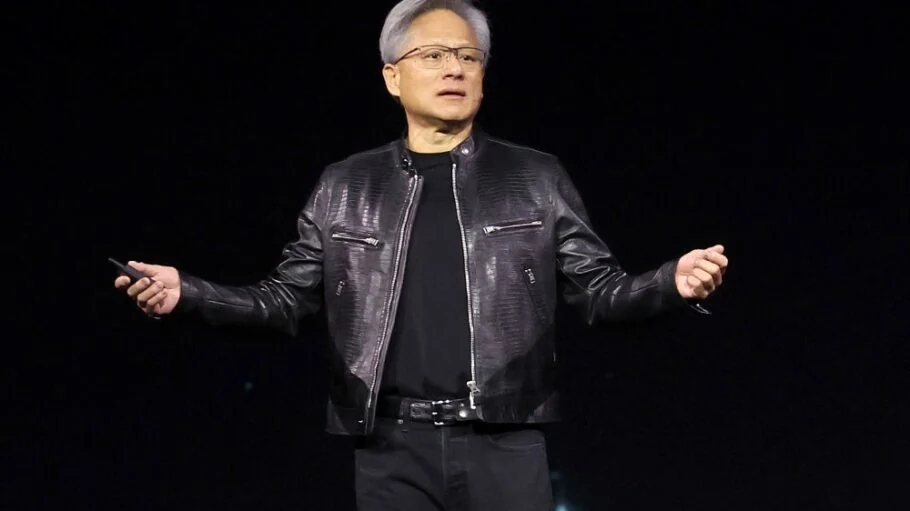
Jensen Huang, who turned Nvidia from a maker of graphics chips for video games into one of the most powerful companies in artificial intelligence, has resigned as chief executive, president and a member of the board. Nvidia announced his departure Thursday, a day after its board accepted his resignation with immediate effect, according to a filing with the Securities and Exchange Commission.
The company named Colette Kress, its chief financial officer since 2013, as interim CEO. She will hold both jobs while the board considers candidates from inside and outside the company. Directors also appointed Harvey C. Jones, who has served on Nvidia’s board since 1993, as its first chair. Nvidia shares closed down 4.3% Thursday, Reuters reported.
An investigation preceded the resignation
Huang’s departure followed reports that he had an affair with a woman U.S. authorities suspected of spying for China, according to Reuters. In a message Nvidia published Sunday, Huang acknowledged that he had been unfaithful to his wife and said he would cooperate fully with the board’s independent investigation.
When Nvidia announced the inquiry, the board said it had no reason to believe U.S. national security or company secrets had been compromised. Two days later, its independent directors said they had retained Joon H. Kim, a former acting U.S. attorney for the Southern District of New York, and his law firm to conduct the review. Nvidia’s announcement of the leadership change gave no reason for Huang’s resignation.
Why the change reaches beyond Nvidia
For years, Nvidia was best known for making video games look better. Its graphics processors excelled at performing many calculations simultaneously, a capability that made them especially valuable to companies training AI models. The rise of generative AI put Nvidia at the center of a spending race among cloud providers and technology companies building data centers to train and run those models.
Kress takes over with firsthand knowledge of that expansion. She has spent more than a decade overseeing Nvidia’s finances and explaining its growth to Wall Street. As interim chief, she faces a different set of questions from customers and investors. Cloud providers will want to know whether Nvidia can deliver new chips on schedule. Shareholders will want to hear how the company plans to invest as its largest customers face growing scrutiny over how much they are spending on AI.Washington presents another test. Huang had pushed to preserve access to the Chinese market for Nvidia’s products. Reuters reported that lawmakers from both parties have called for tighter limits on China’s access to advanced AI chips. The leadership change puts Kress in charge as Nvidia navigates a debate with consequences for both its overseas sales and U.S. policy on who can buy some of the world’s most powerful computing hardware.
The board now faces two decisions that will shape Nvidia’s next chapter. Its independent directors must determine what the investigation establishes and what they can tell employees and shareholders about it. The full board must choose a permanent leader who can manage relationships with some of the world’s biggest technology companies while representing Nvidia in Washington. For more than three decades, those responsibilities belonged to the man who helped start the company. The search will show what directors value most in the person who follows him.