



By Jasmine McCain
 Years ago, in a casual conversation, my husband told me how his cleats melted one hot day during football practice. We’re both from Miami, so we are used to the heat. But this was different.
“Some of my teammates fainted,” he said. “You could feel the heat radiating from the ground. It was hard to breathe.”
It turns out that the school he played for had switched from natural grass to artificial turf—a type of plastic. The air temperature was in the 90s that day, but my husband distinctly remembers the school’s big thermometer saying the field temperature was 115 degrees— apparently, hot enough to melt the rubber off his cleats.
Miami-Dade’s Public School Board recently formed a group to explore the idea of converting the city’s natural grass fields to artificial turf. As a climate and health educator with Florida Clinicians for Climate Action, a scientific researcher, and a former science teacher, I am deeply concerned about what this plan could mean for children and young athletes.
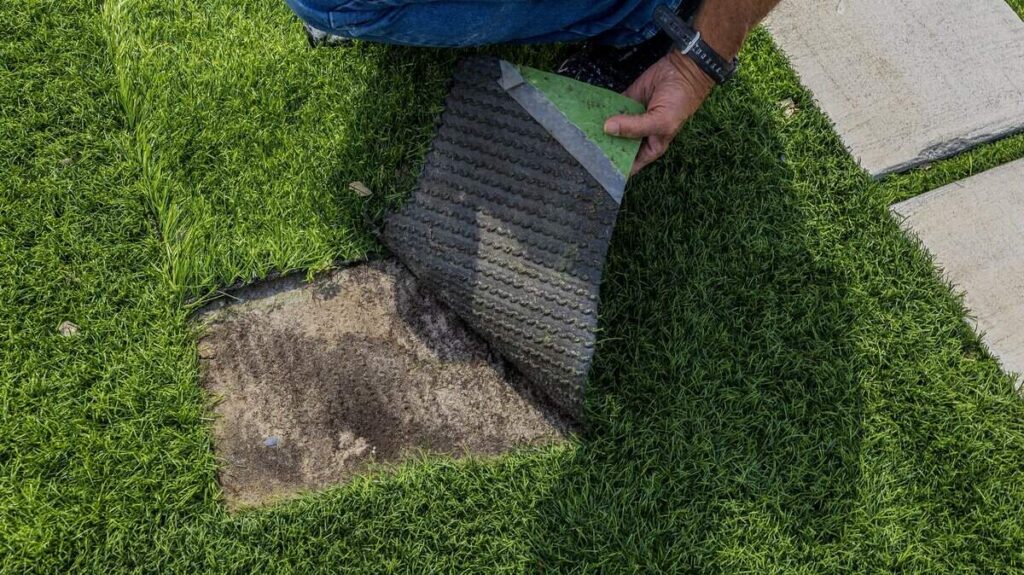
Artificial turf can reach surface temperatures approximately 40 to 70 degrees Fahrenheit hotter than natural grass. This is especially worrisome because children are already suffering from heat-related illnesses and deaths due to rising temperatures, and extreme heat is already putting young athletes at increased risk for heat exhaustion and burns.
Globally, according to UNICEF, nearly 400 children die every year as a result of extreme heat. In the United States, research published by the American Journal of Preventive Medicine found that more than 9,000 high school athletes are treated for exertional heat illness each year.
The School Board says the switch to artificial turf could save money. But at what cost?
The budget pressures are real: according to the Florida Policy Institute, Miami-Dade Public Schools face intense budgetary constraints due to expanded school-choice policies and universal private-school vouchers. Though the conversion will reduce maintenance expenses, any savings that come at the expense of children should be rejected.
As the mother of a rambunctious four-year-old, I’m most concerned about what it costs children to play on a surface that could get hot enough to melt shoes. I’m not alone: recently, more than one hundred concerned parents signed a letter opposing artificial turf.
The debate over artificial turf is not just a local issue: it’s happening at the highest levels of professional sports. Some NFL Players have been pushing the league to permanently commit to natural grass through the #WorthTheCost campaign. An overwhelming 92% of players surveyed by their union say they prefer playing on natural grass, and studies show an overall reduction in lower-body injuries. The recent FIFA World Cup boosted support for the campaign after stadiums were forced to revert to natural grass to meet FIFA standards.
When world-class athletes are fearful of the effects of artificial turf on their bodies, parents and school board members should pay attention.
The dangers of heat have long been known. Research-informed policies have dramatically reduced incidents of preventable heat illness and death globally. In Europe, public health officials implemented heat prevention plans, which reduced heat related deaths by a quarter.
On a smaller scale, coaches insist on water bottles, facilities provide greater access to shade, and everyone tries not to rely on a single water fountain for twenty students. We have learned that hydration, shade, and cooling can be the difference between a fun practice and a trip to the emergency room.
The School Board’s consideration to convert natural grass fields into artificial turf might help balance the city’s budget, but it comes at the high price of more heat illness, more trauma, and potentially deaths. As a mother, I believe this is not a cost we should bear.
Artificial turf is a step backward. We should not take it.
—
Jasmine Mccain graduated from Bethune-Cookman University with a degree in biology and is currently pursuing a master’s degree in medical anatomy and physiology at the University of Florida. Her background in science, research, and community service has strengthened her passion for improving health outcomes in an increasingly connected global community
______________________________________________________________________________________
The views and opinions expressed in this article are those of the author and do not necessarily reflect the official policy or position of M•I•A MEDIA GROUP LLC. Any content provided by our contributors is their opinion and is not intended to malign any religion, ethnic group, club, organization, company, individual, or entity.
