




By Raynell Gordon
Fifteen months isn’t enough time to define a career. But it can be enough time to make history.
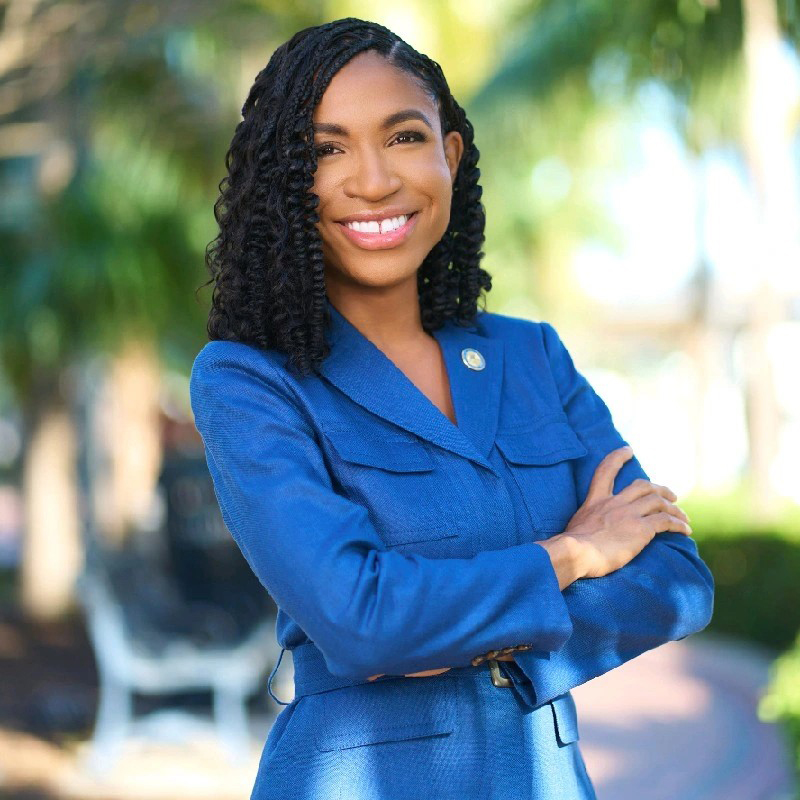
When Rickelle Williams became Fort Lauderdale’s city manager in April 2025, she became the first Black woman to lead Broward County’s largest city and county seat. For Williams, the milestone represented more than personal achievement. It reflected years of preparation and expanded the range of what local government leadership can look like.
“I definitely look at the roles that I’ve held, in particular the city manager role in Fort Lauderdale, as one that is defining, not just for my career, but also for the industry in general,” Williams reflected. Her appointment came in a profession where, according to International City/County Management Association research, Black women make up just 3.7% of municipal chief executives.
“ It was a privilege and an honor,” she continued. “I know that a lot of professionals in the industry looked at my appointment as something to be proud of. The opportunity demonstrated that I was qualified, capable, and experienced. It also showed that the community embraced me not just because of what I looked like on the outside, but what I brought to the table.”
A Jamaica native who immigrated to the United States at age 6 and grew up in Miami Gardens, Williams spent nearly two decades in public service before leading Fort Lauderdale, holding executive roles in Miami Gardens, Miami-Dade County, Dania Beach and Miami Beach.
Williams said her focus was never simply managing day-to-day operations but preparing the organization for the future. During her tenure, she negotiated the city’s Fire Union collective bargaining agreement before it expired, identified approximately $2.6 million in new revenue sources, earned a AAA bond rating for special obligation bonds, promoted 20 employees into leadership positions and accelerated key infrastructure and capital projects.
“Fort Lauderdale gave me a wonderful opportunity. I certainly took that responsibility seriously and accomplished so much during my tenure,” she said.
Williams said the city’s General Obligation bond program best illustrates why she believed change was necessary.
“The parks bond was approved in 2019,” she said. “When I started with the city, only 25% of the bond funding had been expended. The projects had not been prioritized and scheduled.”
Drawing on experience managing previous bond programs, she said she implemented lessons learned to improve delivery. That urgency also influenced staffing decisions that later drew criticism.
“When I started with the city, there were five executive-level assistant city managers,” Williams said. “I felt that it was appropriate to continue not with five assistant city managers, but with four. So I didn’t increase the number of executive positions. I just memorialized what had been in place before my arrival and actually reduced them.”
Williams acknowledged hiring experienced professionals she had worked with previously but said she filled positions based on qualifications because the city “did not have the luxury of leaving positions unfilled.”
Her administration also faced scrutiny over a purchasing-card audit. Williams noted the audit examined activity before she became city manager and said reforms were already underway.
“Nonetheless, I took it upon myself along with the team to make significant changes to the way that the purchasing card program operated,” she said. “Once a lot of these issues came to light, and even before some of them were revealed in the audit, I instructed my team to make changes.”
Despite the challenges, Williams said connecting with residents remained among the most rewarding parts of her tenure.
“I attended as many civic homeowners association meetings as possible to really get a pulse of the community,” she said. “Being new to the Fort Lauderdale community, I wanted to take the time to be a good listener, a good learner, and then to also take action.”
Throughout the interview, Williams returned to one guiding principle.
“There are times when mediocre masquerades as excellence,” she said. “My intention is always to elevate the status and to exceed expectations.”
As she reflected on her career and considered what comes next, Williams offered the advice she hopes future leaders will remember.
“Hard work does not get old, and there is no substitute for it,” she said. “You have to put in the work. You have to be dedicated and prepared because every moment, every opportunity reflects not just on you personally; it reflects on the organization and the community.”
