









Summer is expected to be hotter than usual in Florida this year – and this may put your health more at risk than you think.
Service, there is 40-50 percent chance Florida temperatures will be higher than average this summer.
This is a major health risk for people with chronic conditions, older adults, those who work outdoors, and people who take certain medications that affect heat tolerance.
More than 60,000 people are treated in the emergency room every year for heat stroke and other heat-related illnesses and about 13 percent of these people typically need to be hospitalized, according to the Centers for Disease Control and Prevention. Florida has the most heat-related emergency room visits in the U.S., according to a Florida Policy Institute report.
And as average summer temperatures have risen over time in the U.S., so too have heat-related deaths, according to a study from the Yale School of Public Health. The report shows that since 2000, heat-related deaths in the U.S. have risen by 50 percent.
“Many people don’t realize how vulnerable they are to heat-related illnesses during Florida’s intense summers,” said Dr. Thomas Graf, vice president and chief medical officer for Florida Blue. “You can think you are fine and soon be in crisis. When you are outside, be sure to stay hydrated, plan your activities for morning or evening when possible, limit your total time in the heat and pay attention to early signs like rapid heartbeat, no sweating or profuse sweating, headaches or nausea and get out of the heat right away”
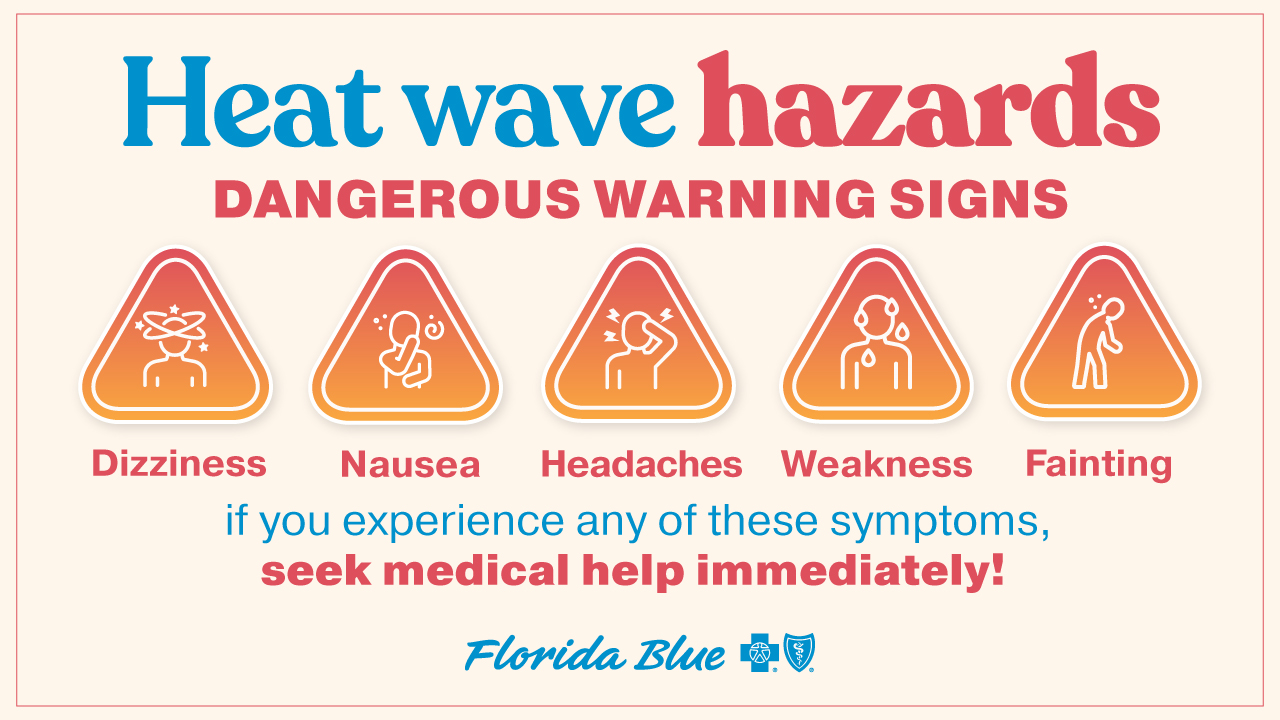
Here’s how heat may affect you without you even realizing it:
• You take medication that affects your heat tolerance. This is a side effect of many common medications, including certain heart medications, decongestants, antidepressants, and more.
• You have a chronic condition like heart disease, diabetes, Parkinson’s disease, or chronic obstructive pulmonary disease (COPD). These conditions can disrupt how your body reacts to temperature changes, and you’re more likely to take medications that affect you, too.
• You’re an older adult. As we age, our bodies are no longer able to regulate temperature changes as well as they did when we were younger. You’re also more likely to have chronic conditions and take medications.
• You work outside … and have a chronic condition or take a medication that affects heat tolerance. More than 600,000 Floridians work outside, according to the Florida Policy Institute. While many outdoor workers prepare drinking plenty of water, some face risks they cannot change due to their employment, such as wearing heavy clothing. Also, some outdoor workers may not realize their risk is increased because they have a chronic condition or take medication that affects how the body reacts to heat.
“The good news is heat stroke is preventable,” Graf said. “Take this risk seriously. Drink water and be careful when you’re outdoors. Don’t wait to get help if you start feeling dizzy or weak. Your health is worth it.”
Cindy Mason is the Broward County Market Leader for Florida Blue developing, leading, and executing the company’s local operational/sales strategy.
